the best Trakyo Pod episodes, ranked by tactics per hour
“Think of each video as like a property that you're just collecting rent from.”
the short version
the ranking
Ayman Arab, 9.8 tactics per hour
8 tactics in ~49 minutes (2925s). 3K views on YouTube, per the Podex show page. Arab runs a YouTube agency for more than 40 channels, mostly info and B2B. this play is tactic 02, Make Evergreen Videos You Collect Rent From.
Arab's whole system treats a channel as a funnel, not a feed. on the Podex page: "We're really focused on making evergreen pieces of content". the reason is leverage. a one-off trending idea fades, while a searchable, evergreen topic keeps pulling leads for years after you post it. his model for clients is the line at the top of this post: each video is a property you collect rent from. the page also has his funnel point, that buyers rarely convert on one video: "usually before somebody converts, they're typically watching like four or five videos or more before they make a buying decision". our YouTube post covers that video ecosystem play. here, the rent part.
the tactic: build assets, not spikes. one evergreen video that keeps getting found beats three trend videos nobody searches for next month.
try this week: list three questions your buyers type into YouTube search that will still be true next year. pick one and script your next video around it instead of a trending idea.
Ayman Arab, Trakyo Pod
Make Evergreen Videos You Collect Rent From
Create evergreen videos that keep earning like rental property.
Ayman Arab says
The focus is on making evergreen pieces of content that keep working forever. Think of each video like a property you are just collecting rent from.
Try this
Pick one searchable, evergreen topic in your niche and script a video around it instead of a one-off trending idea.

Soowei Goh, 9.6 tactics per hour
8 tactics in ~50 minutes (3009s), and all 8 are open on the Podex page. 5K views on YouTube, per the Podex show page. Goh built a consulting business on YouTube alone while at university, per the page. this play is tactic 02, Do Market Research Before The Hook.
if you only play one Trakyo episode, make it this one: every tactic is free to read. Goh, who goes by Sui, treats content as a science. before any script or hook, he maps the prospect's problems, obstacles and desires. on the Podex page: "The most important part about every piece of content is a market research phase". his best source for that research is not a tool. it is his own sales calls: "every time you hear an objection, that is a gold mine for your content piece". tactic 03 goes further: "How can I describe my prospects' problems so in detail that it feels like I understand it better than they do". his title-first and booked-calls plays are in our YouTube post.
the tactic: research before you write. the objection a buyer gave you last week is a better topic than anything a trend tool suggests.
try this week: write down the last five objections you heard on sales calls, in DMs or in comments. turn each one into a content topic, and post the first one this week.
Soowei Goh, Trakyo Pod
Do Market Research Before The Hook
Turn a recent sales call objection into your next content piece.
Soowei Goh says
The most important part of every piece of content is a market research phase. This means understanding prospects' problems, obstacles, desires, what's stopping them, and their pain points. The key is tying those things to the objections heard on sales calls. Every objection heard is a gold mine for a content piece.
Try this
Write down the last sales call objections you heard and turn each into a content topic this week.

Musa, 7.6 tactics per hour
12 tactics in ~94 minutes (5654s). 16K views on YouTube, per the Podex show page. Musa built a software company with clipping, per the page. this play is tactic 02, Pacing Is the Most Underrated Clipping Technique Ever Made.
Musa's big claim is about growth: "The only way you do that profitably is with clips. There's nothing else." he means getting from zero to a thousand customers, and the Podex page credits one TikTok video with taking his company Crayo from $100K to $550K a month. but the play you can run this week is smaller and more useful. his words: "Pacing is probably the most underrated clipping technique ever made, ever in the history of clipping, right?" pacing is cut timing, sound effects and syncing the edit to the music. platforms reward clips that hold viewers, so a clip that loses them dies, however good the idea was. if you have long videos or podcasts, you already have the raw material.
the tactic: edit for rhythm, not just content. the same clip with tighter cuts can hold people the plain version loses.
try this week: take one clip you already posted. re-edit it with cuts timed to the music and a faster start, post it again, and compare watch time between the two versions.
Musa, Trakyo Pod
Pacing Is the Most Underrated Clipping Technique Ever Made
Edit with strong pacing so the cuts and sound keep viewers watching longer.
Musa says
Pacing is probably the most underrated clipping technique in the history of clipping. It is about how the edit feels, the momentum, matching the music, and making the sound effects and cuts click so it feels like the cleanest edit. Platforms want to keep you on as long as possible. Watch time is your best friend.
Try this
Edit your next clip with deliberate pacing, matching cuts and sound to the music, and watch whether watch time improves.

Jordan Welch, 7.5 tactics per hour
8 tactics in ~64 minutes (3852s). 3K views on YouTube, per the Podex show page. Welch talks about launching an education company with free content first. this play is tactic 01, Launch the Free Challenge First, Then the Paid Offer.
Welch did not open his new company with a paid program. on the Podex page: "We launched this originally as a free course, as an affiliate play". the page says the challenge pulled 20 to 30 million views in a month. the mechanic is sequencing: the free story comes first, and the paid offer is built on top of it. his own line on how much rides on that first video: "If that challenge doesn't go out and that video doesn't go out, this business doesn't go out." the story is not marketing for the offer. it is the foundation. we used this play in how to get your first customers; here it is the free play from his episode.
the tactic: give the story away first. a public, free challenge builds the audience your paid offer needs.
try this week: design one free challenge around your offer that you can document in public (for example, seven days, one result). announce it this week, before you build anything paid.

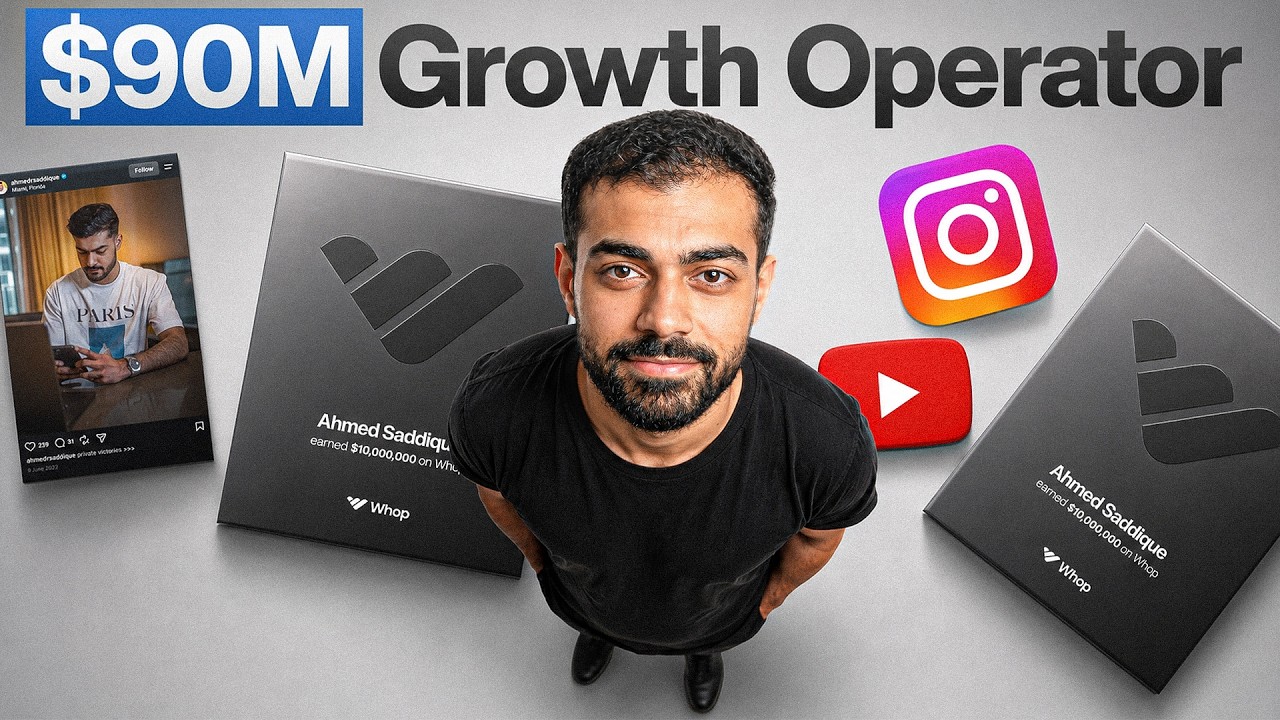
Ahmed Saddique, 6.9 tactics per hour
9 tactics in ~78 minutes (4688s). 9K views on YouTube, per the Podex show page. Saddique has spent about a decade running the back end of info businesses, per the page. this play is tactic 01, Segment by Engagement Window Before You Send Anything.
this is the email episode. Saddique's headline claim, on the Podex page: "This guy had less than 100,000 people following him on Instagram, about 10,000 people on his email list, and we made about 10 million from that list." that is his number, not ours. the first play behind it is boring on purpose. split your list by when people last opened an email, using the windows your provider already reports: "Should tell you how many people have opened up an email in the last 30 days, 60 days, 90 days, 180 days". never send a booking link to someone silent for 180 days. send them one email, wait a week, and cut the ones who neither reply nor click. tactic 02 adds the stages: a lead is just a name, email and phone number.
the tactic: sell to the people who are still listening. a booking link sent to a cold list costs you trust and deliverability.
try this week: filter your list by last open date. send one value email (no link to book) to anyone inactive for months, and remove the ones who do not reply or click within a week.
Ahmed Saddique, Trakyo Pod
Segment by Engagement Window Before You Send Anything
Check last open date and stop sending booking links to inactive contacts.
Ahmed Saddique says
Email providers show how many people opened emails in the last 30, 60, 90, and 180 days, and those are the brackets his team looks at. He would not tell someone who hasn't opened emails in the last 180 days to book a call with his team. Send an email, wait a week, then cut whoever didn't reply or click a freebie. Repeatedly emailing people who never open burns your list and trust.
Try this
Filter your list by last email open date and stop sending booking links to anyone inactive for a long stretch; send one value email and cut non-responders after a week.
Jake Trinder, 6.2 tactics per hour
15 tactics in ~145 minutes (8722s), the most in the show. 12K views on YouTube, per the Podex show page. Trinder runs strategy behind more than 100 YouTube channels, per the page. this play is tactic 02, Research Your Niche With A Depth First Search.
Trinder's hook framework is the famous part: "Promise, proof, plan, persona. Four Ps. That's the framework that I use for all hooks." our YouTube post walks through it. the less famous part is how he picks what to make. on the Podex page: "I use an algorithm which I actually learned in school funny enough because I'm from a computer science background and that's where my education stems from which is called a depth first search algorithm". in plain terms: go all the way down one search term. open each outlier video's channel, log why it worked, and only then go back up and move to the next term. the page says it often takes a full week of focus.
the tactic: go deep on one term before you go wide. one fully mapped search term beats ten skimmed ones.
try this week: pick one search term in your niche. open every outlier video for it, then each outlier's channel, and write one line per video on why it worked. do not touch a second term until the first is done.
Pierre Corey, 6.1 tactics per hour
8 tactics in ~78 minutes (4700s). 72K views on YouTube, the most viewed episode in the catalog, per the Podex show page. Corey built the sales and marketing engine behind a creator doing eight-figure months, per the page. this play is tactic 01, Identify The One Constraint And Attack Only It.
the most watched Trakyo episode is also the least glamorous. Corey's method, per the Podex page: track every step of the funnel every day, find the single worst number, and attack only that until it moves. his opening line: "The number one skill you can acquire is being able to identify the constraint." the reason: "if we only attack this thing and we double this number or increase it by 10% it's going to have the biggest effect on everything else". tactic 02 keeps it honest: a daily scorecard, filled out by hand, and a blunt rule: "Everyone has to fill it out and you're not allowed to show up to the meeting unless you filled it out".
the tactic: one constraint at a time. improving five numbers a little loses to doubling the one that is holding the rest back.
try this week: write your funnel as steps (views, leads, calls booked, calls shown, sales) with this week's number for each. circle the weakest conversion and work only on that one until next friday.

Sam Gaudet, 5.4 tactics per hour
9 tactics in ~99 minutes (5963s). 7K views on YouTube, per the Podex show page. Sam spent nine years building Dan Martell's content operation, per the page. this play is tactic 02, Run Every YouTube Video Through Click, Capture, Consume, Convert.
Sam's first point is that topic beats production value, and our YouTube post runs that one. the second is the filter he puts every video through before it gets made. on the Podex page: "when I first outline a YouTube video, there's three T's that I look for, right? I think about what's the topic, what are we talking about, what's the title of the video, and what's the thumbnail." viewers have to choose to click, so a video that fails the three T's is lost before anyone sees the edit. once it passes, the opening runs promise, then proof, then plan, and the page warns that undersold proof is a mistake.
the tactic: kill weak ideas at the outline. if the topic, title and thumbnail do not work together on paper, the edit will not save it.
try this week: before your next video, write the topic, the title and a one-line thumbnail sketch on one page. if any of the three is weak, fix it or drop the idea before you film.
Tristan, 5.3 tactics per hour
8 tactics in ~90 minutes (5401s). 60K views on YouTube, per the Podex show page. Tristan built the content system behind Iman Gadzhi's videos, per the page. this play is tactic 01, Develop Your Head Of Content, Don't Find One.
this is the episode for founders who want to hire someone to run content. Tristan's lesson, on the Podex page: "I was not found. I was developed. I was put into a position where I could grow into that role and become that person." instead of searching for a savior hire, pick someone on the team with the aptitude and the attitude, and build them a roadmap into the role. tactic 02 says what to look for: "a head of content should have a balance between a creative mindset and an operational mindset". a pure creative with no systems just produces chaos. if you are still a team of one, save this for your first hire and read entry 7 first.
the tactic: grow the role from inside. the person who already knows your content and wants more is a better bet than a stranger with a great reel.
try this week: name one person on your team (or one freelancer you already use) with the aptitude and the willingness to grow. book a 30-minute talk about what a path to running your content would look like.
Tristan, Trakyo Pod
Develop Your Head Of Content, Don't Find One
Identify a team member with the right aptitude and attitude, then build their roadmap.
Tristan says
Tristan was not found but developed, placed into a position where he could grow into the role. Instead of looking for the next guy to solve all your problems, business owners should look long term and identify someone on the team with the aptitude and attitude. Sit down and build a road map for them to grow into the head of content role over the next six months to a year.
Try this
Identify one team member with aptitude and willingness to grow, and schedule a conversation about a roadmap into a head of content role.

Timothy Lewong, 5.2 tactics per hour
8 tactics in ~93 minutes (5586s). 16K views on YouTube, per the Podex show page. Lewong built an online education business on cold traffic, with no personal brand for most of that run, per the page. this play is tactic 01, Run Cheap Tests A Year At A Time Until One Sticks.
Lewong's path was a decade of cheap experiments. on the Podex page: "This wealth management internship wasn't it for me. Then I tried coding and that wasn't it for me." the point is the time frame: "each time I did a test, it's not like I'm testing it for a month". he gave each idea a long, real run, and each failure left a skill behind. the Facebook ads he learned on a fashion brand later filled the rooms for his in-person seminars. tactic 02 is what came next: he refined his pitch live, in person, before he ever recorded it. if you are still choosing what to build, pair this with how to validate a business idea.
the tactic: test long, keep the skill. a failed idea that taught you a skill is a cheap tuition bill, not a loss.
try this week: write down the idea you are testing now, a fixed end date for the test, and the one skill you will keep even if it fails. put the end date in your calendar.
Timothy Lewong, Trakyo Pod
Run Cheap Tests A Year At A Time Until One Sticks
Pick one idea, test it for a year, and keep the skill even if it fails.
Timothy Lewong says
Timothy tried a wealth management internship, then coding, then a tech startup attempt, and investment banking, spending about a year on each. Each time he failed, he actually got good at something else in business, like learning to code or learning about Facebook ads from his roommate during the fashion business. Each test wasn't run for just a month, and when you don't know anything yet you just have to try a bunch of stuff.
Try this
Pick one business idea to test for a set period, and write down the one skill you plan to keep even if it fails.

Brez, 4.0 tactics per hour
8 tactics in ~120 minutes (7229s), the longest episode here. 40K views on YouTube, per the Podex show page. Brez lost money on day trading, NFTs and drop shipping for over two years before it scaled, per the page. this play is tactic 02, Study The Vendor You Hired, Then Replace Them.
last on density, not on story. Brez's free-posting play is in how to get your first customers, so here is the other free one. he paid an ads agency, and on the Podex page: "That whole time I was studying what this agency was doing inside of my ad account." once he understood it, his conclusion was simple: "what these dudes are doing at this small scale of $1,000 a day in revenue, like it can't be that hard". then he fired them. the lesson is not that agencies are bad. paying someone should also teach you the job, so you can judge them.
the tactic: learn what you pay for. if you cannot explain what your vendor does each week, you cannot tell if they are worth it.
try this week: pick one thing you outsource. spend 30 minutes inside the account or tool and write down exactly what they did this week, before you renew or pay the next invoice.

a one-week plan to use the best Trakyo Pod episodes
pick by problem
your videos get views but no customers: Ayman Arab.
the play: make evergreen videos that keep pulling leads, like rent. [open on Podex](https://www.getpodex.com/episodes/trakyo-ayman-arab-youtube-agency)
you never know what to post next: Soowei Goh.
the play: turn your last five sales objections into your next five topics. [open on Podex](https://www.getpodex.com/episodes/trakyo-soowei-goh-consulting)
you want growth but ads are too expensive: Musa.
the play: post clips first, and edit them with tight pacing. [open on Podex](https://www.getpodex.com/episodes/the-crazy-genius-who-made-40m-destroying-your-attention-span)
your email list is big but nobody books: Ahmed Saddique.
the play: split the list by last open date before you send a link. [open on Podex](https://www.getpodex.com/episodes/the-crazy-genius-who-made-90m-selling-digital-products-online)
you are working on everything and nothing moves: Pierre Corey.
the play: find the one weakest number in your funnel and attack only that. [open on Podex](https://www.getpodex.com/episodes/trakyo-pierre-corey-operator)
you pay a vendor and do not know what they do: Brez.
the play: study the account they work in before you renew them. [open on Podex](https://www.getpodex.com/episodes/trakyo-brez-15m-empire)
what this ranking is not
every page has more locked plays: Trinder's diagnose a flop from the retention graph, Corey's call booked leads in under five minutes, Lewong's business nest egg before the music stops, Brez's fix the product before you market it.
one summary, every tuesday.
the tactics that matter, each with a step to run. unsubscribe anytime.
FAQ
What are the best Trakyo Pod episodes?
Ranked by tactics per hour across the 11 episodes in the Podex catalog, the top three are Ayman Arab (9.8), Soowei Goh (9.6) and Musa (7.6). Arab and Goh are the best starting points for using YouTube to get customers, and Musa for short-form clips. For sales and operations, Ahmed Saddique (email lists) and Pierre Corey (finding your one constraint) are the next two to play.
What is Trakyo Pod?
Trakyo Pod is a YouTube podcast that interviews the creators and operators behind eight-figure online businesses, hosted by Yousef Lashuel per the Podex show page. Podex has summarized 11 episodes into 101 tactics, each with one step to try this week.
Which Trakyo Pod episode is best for growing on YouTube?
Start with Soowei Goh: all 8 tactics are open on the Podex page, including "The most important part about every piece of content is a market research phase". Then Ayman Arab for evergreen videos, Jake Trinder for his four Ps hook ("Promise, proof, plan, persona.") and Sam Gaudet for topic, title and thumbnail. Our how to grow a YouTube channel post combines them.
Which Trakyo Pod episode should I start with if I sell a service or a course?
Pierre Corey, for the operating side: "The number one skill you can acquire is being able to identify the constraint." Then Ahmed Saddique for the email side: split your list by last open date before you send a booking link. Both are about fixing the funnel you already have before adding more traffic.
How many Trakyo Pod episodes are on Podex?
11 episodes with 101 tactics in total, about 16 hours of audio. Each episode page has free tactics (all 8 on the Soowei Goh page), with the rest in the full playbook. Or paste any episode into Podex and read the tactics first.