the best Modern Wisdom episodes, ranked by tactics per hour
“It's so easy to be great nowadays my friend because most people are weak.”
the ranking
paste the link into Podex. you get the tactics, each with one concrete step, without listening twice.
Charles Duhigg, 9.0 tactics per hour
11 tactics in ~1.2 hours. shortest episode on the shelf, densest by a distance.
Duhigg, the author of Supercommunicators, starts with a confession. he used to come home from his job at the New York Times, complain about his boss, and his wife would offer something practical, like taking the boss out to lunch. he would get more upset, not less. the episode explains why, and what to do instead.
the tactic: diagnose the conversation type, then match it. citing researchers who study conversation, Duhigg says most discussions mix three kinds: practical (solving problems, making plans), emotional, and social (how we relate to each other). for the emotional kind, his line on the transcript is: "I don't want you to solve my feelings. I want you to empathize." when two people are in different kinds of conversation at once, they talk past each other.
try this week: the next time someone brings you a problem, label it in your head before you answer: practical, emotional, or social. if it is emotional, ask how it felt before you offer a single fix.
also on the page: Ask Ten To Twenty Times More Deep Questions, Loop For Understanding, Refuse To Let A Fight Kitchen Sink.
source: Charles Duhigg, "The Secret Habits Of Supercommunicators," Modern Wisdom #909 (Mar 2025). Podex, YouTube, transcript
Charles Duhigg, Modern Wisdom
Diagnose And Match The Conversation Type
Before you respond, label the conversation as practical, emotional, or social, then match that mode instead of defaulting to advice or small talk.
Charles Duhigg says
I silently diagnose whether someone is in a practical, emotional, or social mindset before I respond. If it's clearly an emotional moment, I ask how it felt instead of offering congratulations or advice. When two people are in different conversation types at once, they literally can't hear each other.
Try this
Diagnose the conversation type, then match it instead of defaulting to advice or praise.

Spencer Greenberg, 8.2 tactics per hour
12 tactics in ~1.5 hours. brand new (October 2026) and tied for the highest tactic count on the shelf.
Greenberg and his co-author went through more than 100 self-improvement books and more than 20 types of therapy, then sorted almost 500 techniques by the psychological lever underneath. his conclusion, in his words: "there isn't one silver bullet that works for all people at all times." so the episode is a toolbox, not a gospel.
the tactic: run a worry time. pick one fixed time of day (his example is 5 p.m., and not right before bed). every time a worry shows up during the day, write it down and push it to that slot. when the slot arrives, worry on purpose for 15 or 20 minutes. then switch to problem solving: pick one worry and make an action plan for it. most people find out they have more control over their worry than they thought.
try this week: set a daily 5 p.m. worry time reminder. keep a note open all day for deferred worries. at 5, give them 15 minutes, then turn one of them into a single next step.
also on the page: Build A Fear Hierarchy And Cut The Safety Behaviors, Run The ABC Technique On Your Fights, Defuse A Thought By Singing It To Happy Birthday.
source: Spencer Greenberg, "The Only 12 Lessons Buried In Every Self-Help Book," Modern Wisdom #1161 (Oct 2026). Podex, YouTube, transcript
Spencer Greenberg, Modern Wisdom
Run A Worry Time
Batch every worry to one fixed daily slot, like 5pm for 15-20 minutes, then convert one item into an action plan.
Spencer Greenberg says
I use a technique called worry time to stop worry from running all day. I pick a fixed time, like 5pm, and never before bed, and defer every worry to it. When that time arrives I deliberately worry as hard as possible about everything on the list.
Try this
Defer every worry to one fixed daily time and worry on purpose only then.

David Senra, 7.2 tactics per hour
11 tactics in ~1.5 hours. the pick for entrepreneurs.
Senra hosts the Founders podcast, where he reads biographies of great entrepreneurs for a living. here he compresses what keeps repeating across them into patterns you can use on a Monday.
the tactic: find a simple idea and take it seriously. the line, "Find a simple idea and take it seriously," is a maxim Senra credits to Charlie Munger (transcript). his favorite example is Todd Graves, who built a chicken finger chain on one item done better than anyone else. you pick three, four, or six chicken fingers, and per Senra the menu has not changed in 30 years.
try this week: write down the one thing you do better than anything else. then remove one thing from your week, your product, or your offer that does not support it.
also on the page: Meet With Entrepreneurs Every Day, Categorize Friends as Sofa Friends or Treadmill Friends, Use the Evil Twin Thought Experiment.
source: David Senra, "14 Patterns Behind the World's Greatest Minds," Modern Wisdom #1126 (Jul 2026). Podex, YouTube, transcript
David Senra, Modern Wisdom
Find a Simple Idea and Take It Seriously
Pick the one thing you do best and remove everything that does not support it.
David Senra says
The winning system often goes ridiculously far in minimizing or maximizing one or a few variables, and this shows up in every successful entrepreneur. Elon talks constantly about simplifying, taking the idea seriously, and deleting or reducing complexity. Todd Graves's original idea was to sell chicken fingers better than anybody else. It's the chicken fingers, the coleslaw, the Texas toast, the fries, and nothing else.
Try this
Write down the one thing you do better than anything else, then remove one element this week that does not support it.

Self Confidence (episode #14), 6.9 tactics per hour
12 tactics in ~1.7 hours. the oldest episode here (2018), and the one most lists skip.
no famous guest. just Chris and two friends breaking down where confidence actually comes from. Chris says his own confidence was mostly built as a club promoter, dealing with high-energy people every night. the useful part is what replaced it.
the tactic: speak the truth as your only armor. Chris's argument is that confidence is not a performance. it is what happens when you stop hiding your doubts. on the transcript he puts it this way: "if you tell the truth in any given situation with regards to confidence, you're kind of bulletproof from anyone calling you out."
try this week: in one low-stakes conversation, say the plain truth where you would normally polish it (I'm nervous about this, I don't know yet). notice that nothing breaks. repeat it somewhere slightly higher stakes.
also on the page: Use The Six Minute Diary, Shift From Self Consciousness To Other Consciousness, Rerecord Until The Fear Wears Off.
source: "Self Confidence," Modern Wisdom #014 (May 2018). Podex, YouTube, transcript
Chris Williamson, Modern Wisdom
Speak The Truth As Your Only Armor
Replace one habitual social lie or polish with the plain truth, in a low-stakes setting first, and repeat it as a standing practice.
Chris Williamson says
I believe telling the truth about how I feel, including my doubts, makes me bulletproof in social situations. I define confidence as telling people exactly how I feel rather than performing a version of confidence. I made a conscious effort over years to be more forthcoming about my doubts instead of hiding them.
Try this
Tell people the truth about how you feel instead of managing their perception of you.

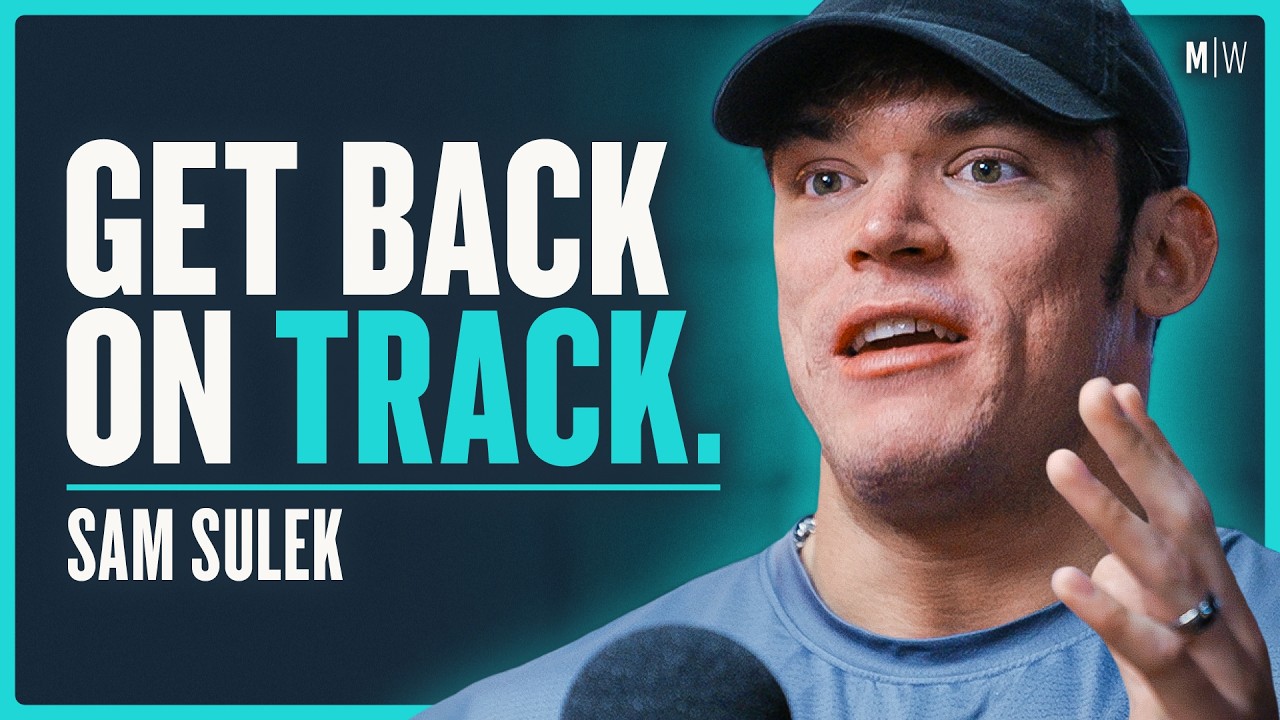
Sam Sulek, 6.5 tactics per hour
11 tactics in ~1.7 hours. the pick for motivation, and one of the newest on the shelf.
people think of Sulek as the guy who films himself lifting heavy. the episode is about something more useful: how to wire yourself so that effort becomes the default, especially on the days you do not feel like it.
the tactic: go harder instead of going fancier. Sulek is not against smart training. he just puts effort first: "I'd rather train super hard than super smart." the wiring he wants in his head, per the transcript: "the harder I go, the more progress I'll make."
try this week: keep your basic lift (or your basic work block) exactly the same. no new variation. push the effort one notch higher each session, and log it.
also on the page: Start From Zero, Not From Perfect, The C-Game Standard, Consult The Version Of You Three Months From Now.
source: Sam Sulek, "How To Go Hard, Even When You Don't Want To," Modern Wisdom #1157 (Oct 2026). Podex, YouTube, transcript
Sam Sulek, Modern Wisdom
Go Harder Instead Of Going Fancier
Keep the exercise basic and push the effort on it higher each session instead of hunting for a fancier variation.
Sam Sulek says
I think the single most important training principle is just going harder, more than any specific technique. Everyone already knows the basic version of a lift works, they'd tell you to do a straight dumbbell curl, not some exotic variation. If I had to rank it, I'd rather train super hard than train super smart.
Try this
Do the basic version of the lift and push the effort harder instead of chasing a fancier variation.
Daniel Lieberman, 4.7 tactics per hour
10 tactics in ~2.1 hours. the nutrition pick, from a Harvard professor who studies human evolution.
the hook is diets. the real lesson is how to think about any contested evidence without joining a tribe.
the tactic: be a fox, not a hedgehog. Lieberman borrows an ancient Greek line: "the fox knows many things, but the hedgehog knows one big thing." hedgehog diets bet everything on one big idea (it's all about protein, or all about meat). fox thinking accepts nuance and trade-offs. on the transcript he says "the best approach is to look at as much of the information as possible and put it together."
try this week: write down one rigid food rule you follow. rewrite it as a flexible principle with a trade-off you accept, and run that version for seven days.
also on the page: Eliminate Maltodextrin And Hidden Additives, Use Exercise To Lower Insulin Demand, Follow Mediterranean Diet Principles.
source: Daniel Lieberman, "Harvard Professor: 'I Tried Every Diet. This Is By Far The Worst.'" Modern Wisdom #1137 (Aug 2026). Podex, YouTube, transcript
Daniel Lieberman, Modern Wisdom
Adopt The Fox Strategy Over The Hedgehog
Replace one rigid diet rule with a flexible principle that accounts for nuance and trade offs.
Daniel Lieberman says
Hedgehog diets are rigid, big idea approaches, like believing protein or meat is the answer, while fox thinking sees nuance, trade offs and complexity. The hedgehog approach to diet is always the wrong way because people vary and the effects are complicated. The best approach is to look at as much evidence as possible and combine the best elements of low carb, low fat and low calorie approaches rather than picking just one.
Try this
Pick one rigid diet rule you follow and identify a flexible principle to replace it with instead.

Matthew Hussey, 4.5 tactics per hour
10 tactics in ~2.2 hours. the pick for relationships. 1.5M views on YouTube, per the Podex page.
Hussey is a dating coach, and this episode is less about tricks and more about reading the signals you already have, honestly.
the tactic: stop confusing attention for intention, and intention for investment. chemistry gets you someone's attention. that says nothing about what they want. "Attention is not intention, and that is a big mistake that people make," he says on the transcript. and even aligned intentions are not investment: someone can say all the right things and still not show up consistently.
try this week: for the person you are unsure about, write three lines. attention: what you feel. intention: what they have said they want. investment: what they have consistently done. decide based on the third line.
also on the page: Face Out Before You Face In, Audit Eligibility Before You Invest, Go On Dates Asking How You Can Be Impressed.
source: Matthew Hussey, "#1 Dating Coach Reveals The Red Flags Everyone Should Know," Modern Wisdom #625 (May 2023). Podex, YouTube, transcript
Matthew Hussey, Modern Wisdom
Stop Confusing Attention for Intention, and Intention for Investment
Separate attention, intention, and investment before assuming you have a real connection.
Matthew Hussey says
Attention is not intention, and that is a big mistake people make. Even with aligned intentions, intention doesn't equal investment, because someone can say all the right things about wanting to be with you but can't back it up when it comes to actually being consistent. So many mistakes get made in early dating by thinking you have all three of those things when actually all you have is someone's attention, usually for sporadic moments.
Try this
On your next date, separate the feeling of chemistry from actual evidence of stated intention and consistent follow through before investing further.

Robert Greene, 4.2 tactics per hour
10 tactics in ~2.4 hours. the newest episode on the shelf (October 2026).
the 48 Laws of Power author spent seven years on a book about the sublime, and finished it after a stroke. this conversation is about why life starts to feel flat, and how to get the color back on purpose.
the tactic: rehearse your own death to reset your senses. Greene's diagnosis is blunt: "Your senses are dead, I'm afraid." (transcript). his exercise: lie down and feel your body sink and dissolve until the idea of death is physical, not abstract. then get up, go outside, and walk through the world as if you had already died. taken seriously, everything looks more intense.
try this week: do the ten-minute version once. lie down, run the rehearsal, then walk outside without your phone and write down three things you normally filter out.
also on the page: Engineer Your Own Threshold Route, Put Your Phone Away In Nature, Audit Your Own Scroll For Emotional Manipulation.
source: Robert Greene, "Why Life Feels So Dull All The Time (and how to fix it)," Modern Wisdom #1162 (Oct 2026). Podex, YouTube, transcript
Robert Greene, Modern Wisdom
Rehearse Your Own Death To Reset Your Senses
Lie down and rehearse your body dissolving in death, then walk outside immediately and experience the world as someone who has already died.
Robert Greene says
I have people lie down and feel their body sink into the ground and dissolve, until the sensation of dying is physical rather than abstract. After that I have them get up and go outside and walk through the world as if they had already died. Taken seriously, it gives everything an intensity it didn't have before.
Try this
Rehearse your body dissolving in death, then walk outside as someone already dead.

Matthew McConaughey, 3.9 tactics per hour
7 tactics in ~1.8 hours. 3.6M views on YouTube, per the Podex page.
the title tactic comes from a phone call. McConaughey called his dad to say he did not want to go to law school, he wanted film school. after a long pause, his dad said: "well, don't half-ass it."
the tactic: don't half-ass it. if you are going to do it, do it. the cost of hedging is not failure, it is never finding out. on the transcript: "When you half-assed something, you just don't know whether you failed or succeeded."
try this week: pick one thing you are hedging on (a project, a habit, a conversation). decide by Friday: fully in or fully out. if in, do the uncomfortable first step the same day.
also on the page: Make A Sense Of Humor Your Default Emotional Setting, Find Out Who You're Not First, Engineer Inevitability To Survive The Long Middle.
source: Matthew McConaughey, "The Hidden Art Of Reinventing Yourself," Modern Wisdom #863 (Nov 2024). Podex, YouTube, transcript
Matthew McConaughey, Modern Wisdom
Don't Half-Ass It
Pick one hedge today and finish it so you know the real outcome.
Matthew McConaughey says
If you're going to do something, do it, say what you can do, do what you say, and if you can't do it don't say you can. When you half ass something you just don't know whether you failed or succeeded, got what you want or didn't get what you want. The limbo of not knowing, of hedging on what could have happened, is worse than either outcome. Finish it and find out, come out the other side, don't leave it and wonder, because that's what keeps him up at night.
Try this
Pick one thing you are hedging on and decide today whether you are fully in or fully out.

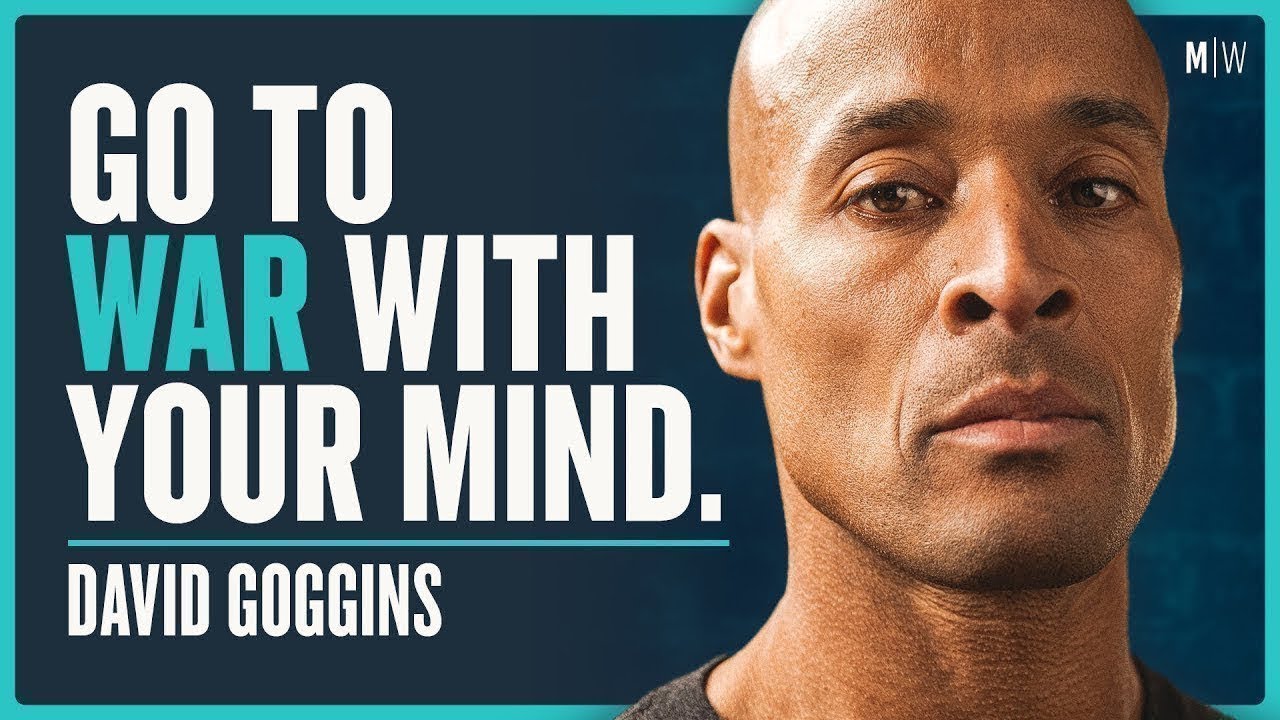
David Goggins, 3.7 tactics per hour
7 tactics in ~1.9 hours. the most-viewed episode in this set (8.3M on YouTube, per the Podex page), and all seven tactics are free on the page.
people remember the yelling and the 240-mile races. the episode is a calm walkthrough of how Goggins makes decisions when his body wants to quit.
the tactic: win the one second decision. Hell Week is about 130 hours, which is a lot of seconds. "It only takes one second for you to lose the whole thing" (transcript). in the cold surf, he stays in the water physically but goes to the beach mentally, warm, next to the instructors with their parkas and coffee. once he is calm, he thinks logically: where do I end up if I quit, and what will I say to myself?
try this week: name the exact moment you usually quit (the alarm, the last set, the hard email). pre-decide your one-second move: one slow breath, the question above, then one more step.
also on the page: Cap Your Own Success, Organize The Garage Before Adding Discipline, Run A Live Autopsy On Yourself.
source: David Goggins, "This Is How To Master Your Life," Modern Wisdom #577 (Jan 2023). Podex, YouTube, transcript
David Goggins, Modern Wisdom
Win The One Second Decision
When your mind wants to quit, mentally shift to a calmer place and think logically before deciding.
David Goggins says
Hell week is 130 hours, and 130 hours is a lot of seconds. If you win every second but one, you still lost, because it only takes one second to lose the whole thing. In that moment you forget every reason why you wanted to be there and you stop caring about any of it. It is hard to process information during pain because the pain takes over and you start thinking about fight or flight instead of thinking rationally. He physically stays in the water, because getting out means quitting, but mentally he goes to the beach with the instructors who already have their parkas on and their coffee, warm because they already went through it. Once he is mentally back and warm, he starts thinking logically again. Then he asks himself where he would end up if he quit, where he would go, and what he would say to himself.
Try this
Identify the exact moment today your mind wants you to quit something, and pre-decide a mental action to shift back to logical thinking.
the rest of the shelf, 11 to 16
Dr Mike Israetel, 3.5 tactics per hour
7 tactics in ~2.0 hours. his episodes keep getting recommended in r/modernwisdom favorite-episode threads.
the tactic: consistency multiplies everything else. asked what explains most of the difference in muscle growth over a year, Israetel answers: "It has to be consistency." show up multiple times a week, even with bad technique, and you get results. then make showing up easy.
try this week: count sessions planned versus sessions done. if the number is low, remove one barrier: a closer gym, a shorter session, a training partner, or exercises you actually like.
source: Dr Mike Israetel, "Exercise Scientist's Masterclass On Building Muscle," Modern Wisdom #744 (Feb 2024). Podex, YouTube, transcript
Hamza, 3.2 tactics per hour
6 tactics in ~1.9 hours. the pick for young men.
the tactic: run the Adonis protocol, not monk mode. monk mode with zero social contact can leave you disciplined and unable to talk to people. Hamza's fix, per the transcript: "kind of like monk mode, but we add in at least one social event per week."
try this week: keep your routine, and put one social event on the calendar before Sunday. go, and stay longer than you planned.
source: Hamza Ahmed, "The Harsh Truths Young Men Need To Hear," Modern Wisdom #779 (May 2024). Podex, YouTube, transcript
Dr Andrew Huberman, 2.6 tactics per hour
7 tactics in ~2.6 hours. 3.8M views on YouTube, per the Podex page. (more Huberman in our best Huberman Lab episodes post.)
the tactic: use the body to move the mind. when you are very stressed, your thinking narrows. his rule on the transcript: "if you can't control the mind with the mind, look to the body to control the mind."
try this week: the next time you are stuck in a thought loop, do something physical first (a ten-minute walk or a few minutes of slow breathing), then go back to the problem.
source: Dr Andrew Huberman, "The Science Of Peak Performance," Modern Wisdom #496 (Jul 2022). Podex, YouTube, transcript
Dr Joe Dispenza, 2.5 tactics per hour
7 tactics in ~2.8 hours. 3.3M views on YouTube, per the Podex page.
the tactic: become conscious of your unconscious self. Dispenza's first step is not positive thinking. it is noticing the automatic thoughts that run you (start tomorrow, it's too hard, I failed last time). change, he says, is the moment "we stop forgetting and start remembering" (transcript).
try this week: once a day, catch one automatic thought as it happens and name it to yourself. no fixing yet. just naming.
source: Dr Joe Dispenza, "How To Unlock Your Mind & Master Your Life," Modern Wisdom #741 (Feb 2024). Podex, YouTube, transcript
Alex Hormozi (23 truths), 2.1 tactics per hour
6 tactics in ~2.9 hours. 4.3M views on YouTube, per the Podex page, and every tactic is free on the page. (more in our Alex Hormozi business advice post.)
the tactic: compress the decision cycle. every hour an unmade decision sits there, you think about it again. on the transcript: "You can move through life at seven times the rate of other people by simply changing when you say you're going to make a decision from end of week to end of day."
try this week: pick one decision you have been delaying and make it before you log off today. then do it again tomorrow.
source: Alex Hormozi, "23 Controversial Truths About Life," Modern Wisdom #670 (Aug 2023). Podex, YouTube, transcript
Alex Hormozi (33 truths), 1.4 tactics per hour
6 tactics in ~4.1 hours. the longest episode on the shelf, so it ranks last on density.
the tactic: hard things don't generalize unless you force them to. running a marathon does not make the hard conversation with your partner easier on its own. "those hard things don't necessarily generalize," Hormozi says (transcript). they only spread if you turn them into an identity label (I am the type of person who does hard things) and then act on that label everywhere.
try this week: write the label down. then use it once outside the gym: the hard conversation, the call you are avoiding, the price you are scared to raise.
source: Alex Hormozi, "33 Brutal Truths To Stop Wasting Your Potential," Modern Wisdom #1117 (Jun 2026). Podex, YouTube, transcript
pick by goal, not by fame
motivation: Goggins.
the play: perform at your best today even with no goal or deadline pushing you.
relationships: Matthew Hussey.
the play: separate attention, intention, and investment before assuming you have a real connection.
entrepreneurs: Alex Hormozi.
the play: remove the other options so you are forced to act on your decision.
better conversations: Charles Duhigg.
the play: label the conversation as practical, emotional, or social, then match that mode instead of defaulting to advice or small talk.
what this ranking is not
every episode above has more plays behind the free one. open it on Podex, grab the step, run it this week. tactics, not takeaways.
one summary, every tuesday.
the tactics that matter, each with a step to run. unsubscribe anytime.
FAQ
What are the best Modern Wisdom episodes to start with?
If you want actionable density, start with Charles Duhigg (#909), Spencer Greenberg (#1161), and David Senra (#1126). If you want the episodes with the biggest YouTube audiences in this set, start with David Goggins (#577) and Alex Hormozi (#670).
What are the best Modern Wisdom episodes on relationships?
For dating, Matthew Hussey (#625) on attention versus intention versus investment. For communication with a partner, Charles Duhigg (#909) on matching the type of conversation you are in.
What are the best Modern Wisdom episodes for motivation?
Sam Sulek (#1157) on making effort your default, David Goggins (#577) on the one second decision, and Dr Mike Israetel (#744) on consistency.
What are the best Modern Wisdom episodes for entrepreneurs?
David Senra (#1126) on the patterns behind great founders, plus the two Alex Hormozi episodes (#670 and #1117) for decision speed and commitment.
What are the best Modern Wisdom episodes according to Reddit?
Threads on r/modernwisdom keep mentioning Bill Perkins, Naval Ravikant, Simon Sinek, Arthur Brooks, Joe Hudson, Donald Robertson, and anything with Dr Mike Israetel. Chris's solo lessons episodes, like 21 Lessons From 999 Episodes, also get recommended.
Who hosts Modern Wisdom?
Chris Williamson. The show covers psychology, performance, relationships, and self-improvement, and the archive is past episode #1160.
How long are Modern Wisdom episodes?
They vary a lot. In this set, they run from about 1.2 hours (Charles Duhigg) to about 4.1 hours (Alex Hormozi, #1117). Most sit around two hours.
Are there transcripts for Modern Wisdom episodes?
Yes, through third-party sites. Every quote in this post was checked against the transcripts on podscripts.co, which are auto-generated, so treat small wording differences with care.