how to stop procrastinating: 6 tactics from the podcasts that explain why you stall
“It seems absolutely formidable because you have no idea of where to start.”
the short version
if the thing you are avoiding is a three-hour podcast someone told you to watch, paste the link into Podex. you get the tactics, each with one concrete step, in a few minutes. then go do the step.
the six tactics
shrink the first piece: Dr. Masud Husain
5 tactics in ~2.3 hours (8421s). 202K views on YouTube, per the Podex page. the only episode here with procrastination in the title, and the one with the clearest model of it.
Husain studies motivation and apathy at Oxford. his model, on the transcript: your brain runs a constant calculation of "reward versus effort" before you start anything. procrastination is that calculation coming out negative. and deciding is not free either: "Every decision has a cost."
the tactic: break the task before you start it. his example is a three-month project from your manager. it feels huge because you cannot see the start. his fix: "What if you could break it down into smaller tasks which bring down that mountain, the activation energy required to get that small thing done?" research one area first. when that is done, move to the second piece. he calls it an if-then construct.
the other lever he names is the reward side. you can make the effort smaller, or change the incentive. the locked tactics on the page cover that, plus planning the week in one sitting so you are not paying the decision cost every morning.
try this week: pick the task you have avoided longest. write the smallest first piece you could finish in 20 minutes (one email, one outline, one search). do only that piece today. tomorrow, write the next one.
Dr. Masud Husain, Huberman Lab
Break the Task Before You Start It
Break a stalled task into one small piece, finish it, then move to the next piece.
Dr. Masud Husain says
A large project can feel formidable because you don't know where to start, so breaking it down into smaller tasks brings down the activation energy required to get it done. The approach is an if-then construct: research one area first, and once that piece is done, move on to a second piece of work.
Try this
Break your stalled task into one small first piece to research or accomplish, and move to the next piece only once that is done.

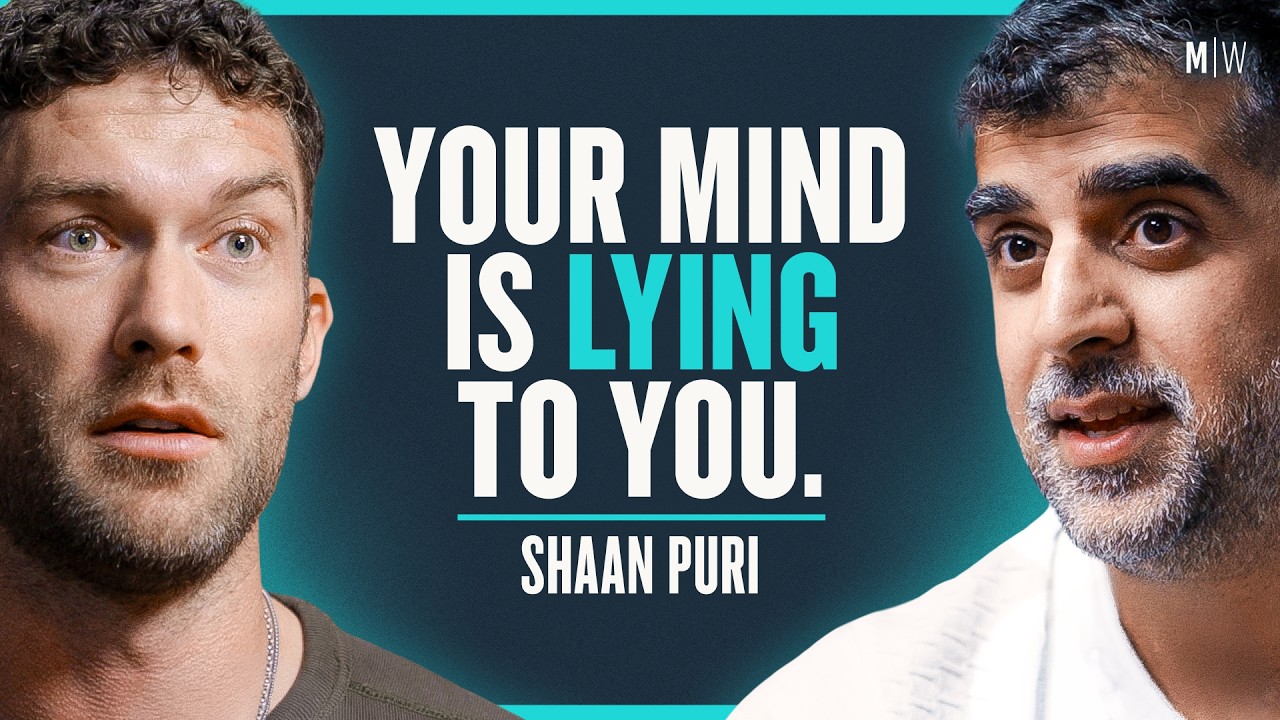
plan only the next step: Shaan Puri
11 tactics in ~1.6 hours (5911s). 108K views on YouTube, per the Podex page. the newest episode here (October 2026) and the shortest framework.
Shaan Puri built and sold a company and co-hosts My First Million. on Modern Wisdom he names the trap behind a lot of procrastination: overthinking. his line on the transcript: "the cure for overthinking obviously is to simplify."
the tactic: the A, B, Z method. most people try to plan every step, A to Z, and doubt piles up with each letter until they freeze. his alternative: "you only need to know three letters in the alphabet. A, B, Z." Z is where you want to end up. A is "where you're currently at. An honest reflection of reality." and B is one question: "What is the next incremental action that gets me towards Z?" do B, and you have a new A and a new B. Z stays the same.
try this week: on one sticky note, write your Z in one line and an honest A in one line. then write only B, the next action. when B is done, rewrite A and B. do not write C.
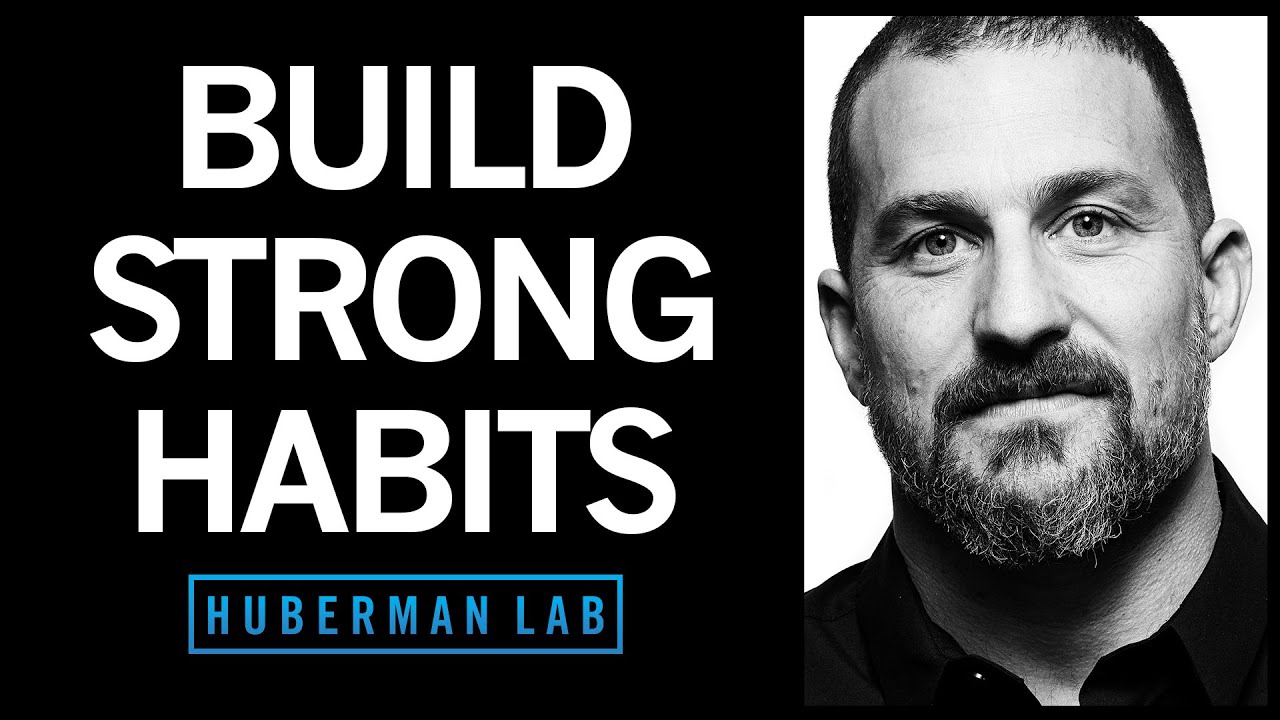
check your state before you blame yourself: Andrew Huberman
7 tactics in ~1.8 hours (6638s). 5.6M views on YouTube, per the Podex page. the most watched Huberman Lab episode in this set.
the Huberman Lab habits episode. the idea that matters for procrastination is a term he coined: limbic friction. on the transcript: "Limbic friction is a shorthand way that I use to describe the strain that's required in order to overcome one of two states within your body." one state is too anxious. the other is too tired. people skip the hard thing, in his words, "because they are too tired to do it, or it could be because they're too anxious and distracted in order to do it."
the tactic: measure your limbic friction before you plan anything. the two states need opposite fixes, so naming which one you are in is the first step. then use timing: he puts the habits with the most friction in the first phase of the day, "zero to eight hours after waking," when alertness chemistry runs higher. his support list for that phase includes sunlight "within the first 30 minutes of waking" and exercise early in the day.
try this week: before your hardest task each day, write one word: wired, tired, or ready. wired? take a short walk or a few slow breaths first. tired? get outside light or move for five minutes first. and book the task inside the first eight hours after you wake up.
Andrew Huberman, Huberman Lab
Measure Your Limbic Friction Before You Plan Anything
Check whether you feel too anxious or too tired before attempting a hard habit.
Andrew Huberman says
Limbic friction is the activation energy needed to overcome either an overly anxious or overly tired state in order to engage in a particular activity or thought pattern. This term is a useful metric for checking in with yourself about whether you are likely to be able to form a certain habit easily. Viewing sunlight or bright artificial light within the first 30 minutes of waking, along with physical exercise in the 0 to 8 hour window of the day, support an alert, action oriented state.
Try this
Before attempting a hard habit today, check whether you feel too anxious or too tired, and note which state you are in.
get curious about why you stall: Dr K
5 tactics in ~2.8 hours (9962s). 2.1M views on YouTube, per the Podex page. the longest episode here, and the one that goes deepest into why.
Dr. Alok Kanojia (Dr K of HealthyGamerGG) is a psychiatrist who trained at Harvard. on Iced Coffee Hour he makes a simple point: no matter what you do, "you're always using the instrument of yourself," and nobody gives you a manual for it. his examples, on the transcript, are the questions people never get taught to ask, like why can't I wake up in the morning.
the tactic: teach yourself EQ before you optimize anything else. procrastination is one of those behaviors you cannot explain from the outside. the play on the Podex page is to pick one habit like that and explore why it happens, without judging it and without trying to fix it yet. this lines up with Husain: if the reward-versus-effort math is coming out wrong, you first need to know which side of the math is the problem. is the task scary, boring, unclear, or just not yours?
try this week: each time you catch yourself avoiding the task, write one line: what you were about to do, and what you did instead. no fixing. at the end of the week, read the lines back and look for the pattern.

give the task your first hours: Hamza
5 tactics in ~1 hour (3734s). 23K views on YouTube, per the Podex page. the smallest audience here, and the bluntest advice.
Hamza is a self-improvement creator, not a scientist, and this is a monologue to his own audience. his argument is that people who already succeeded often outwork the people who need it more, and that the gap is about which hours you give your real work.
the tactic: work in the dark hours. his own version is extreme: a very early alarm, black coffee, and the day's most important task done before anything else. you do not need the 4am part. the part that transfers: your best brain hours go to the one task that matters, so the task is not stuck with whatever energy is left after email. it pairs well with Huberman's point about putting high-friction work early.
no transcript was available for this one, so everything here is paraphrased from the episode and the Podex summary.
try this week: set your alarm 30 minutes earlier for five days. use that first block for the task you keep pushing back, before you open email or chat.
Hamza, Hamza Unfiltered
Work In The Dark Hours
Tomorrow, wake up early and do your most important task before anything else.
Hamza says
Wake up at like 4:00 from tomorrow. Have black coffee in the morning, done. Your brain is different in these dark hours, it's a real psychological shift, not just rearranged hours. You should be doing the real priority of the day as early as possible, giving your best brain energy there, otherwise your work or business only gets what's left over.
Try this
Tomorrow, wake up earlier than usual and do your single most important task first thing, before anything else.

do not start the day on your phone: Dr. Joe Dispenza
5 tactics in ~2 hours (7206s). 14.0M views on YouTube, per the Podex page. the most watched episode in this set by a distance.
Joe Dispenza is an author and speaker on habits and the mind-body connection. most of this Diary of a CEO conversation is about his meditation and mental rehearsal methods. the free play is the most practical part.
the tactic: do not touch your phone first thing. on the transcript he describes the default morning: "reaching for our cell phone as the first thing as a habit that we do," then texts, social media and email, until you "go on autopilot." his suggestion is to run an experiment and start the day differently before the feed decides what you think about.
for procrastination, the first scroll is often the first delay of the day. it hands the start of your morning to everyone else's priorities.
try this week: charge your phone outside the bedroom and do not open it until your first task block (from tactic 5) is done. track how many mornings you make it.
Joe Dispenza, The Diary of a CEO
Don't Touch Your Phone for the First Hour
Avoid checking your phone first thing when you wake up tomorrow.
Joe Dispenza says
Instead of reaching for your cell phone as the first thing you do, checking your texts, WhatsApp, Telegram, social media, Instagram, Twitter, Facebook, and emails, try something different. People get connected to everything known in their life and fall into a redundant habit on autopilot.
Try this
Avoid checking your phone first thing when you wake up tomorrow morning.

a one-week plan to stop procrastinating
pick by problem
the task feels too big to start: Dr. Masud Husain.
the play: break it down until the first piece looks small, finish that piece, then move to the next. [open on Podex](https://www.getpodex.com/episodes/how-to-improve-motivation-overcome-procrastination-dr-masud-husain)
you keep planning instead of doing: Shaan Puri.
the play: name Z, write an honest A, then do only B, the next step. repeat. [open on Podex](https://www.getpodex.com/episodes/9-harsh-truths-no-one-wants-to-admit-shaan-puri)
you are too wired or too tired to start: Andrew Huberman.
the play: name your state, fix it first, and put the hardest task in the first eight hours after waking. [open on Podex](https://www.getpodex.com/episodes/the-science-of-making-breaking-habits)
you do not know why you avoid it: Dr K.
the play: pick one behavior you cannot explain and explore why it happens, without judging it yet. [open on Podex](https://www.getpodex.com/episodes/iced-coffee-hour-ft-dr-k-healthygamergg)
the task only gets your leftover energy: Hamza.
the play: do the most important task first thing, before anything else gets your best hours. [open on Podex](https://www.getpodex.com/episodes/work-harder)
your morning disappears into your phone: Dr. Joe Dispenza.
the play: do not reach for the phone as the first thing you do. start the day on purpose. [open on Podex](https://www.getpodex.com/episodes/doac-joe-dispenza-morning)
what this is not
every page above has more plays behind the free one: changing the incentive, planning the week in one sitting, the 21-day habit program, task bracketing, obsession as fuel. open the episode on Podex, grab the step, run it this week.
one summary, every tuesday.
the tactics that matter, each with a step to run. unsubscribe anytime.
FAQ
How do I stop procrastinating right now?
Shrink the first step. Dr. Masud Husain explains on Huberman Lab that a big task feels formidable because you cannot see where to start, so breaking it into smaller pieces lowers the activation energy. Write the smallest piece you could finish in 20 minutes, do only that, and keep your phone out of reach while you do it.
Why do I procrastinate?
One useful model comes from Dr. Masud Husain: your brain weighs reward versus effort before you start, and every decision has a cost. When the effort looks bigger than the reward, you stall. Andrew Huberman adds a state check he calls limbic friction: you may be too anxious or too tired to start, and each needs a different fix.
What is Huberman's procrastination protocol?
From his habits episode: check your limbic friction (are you too anxious or too tired?), fix that state first, and schedule the hardest tasks in the first zero to eight hours after waking, supported by morning sunlight and early exercise. His Huberman Lab episode with Dr. Masud Husain adds breaking tasks into small pieces and planning ahead so you make fewer decisions on the fly.
What is limbic friction?
A term Andrew Huberman coined for the strain it takes to overcome one of two states before you can act: being too anxious and distracted, or being too tired. Naming which state you are in tells you whether to calm down or wake up before you start.
What is the ABZ method?
Shaan Puri's framework from Modern Wisdom. Instead of planning every step from A to Z, you only define Z (where you want to end up), A (an honest look at where you are now), and B (the next incremental action toward Z). Do B, then update A and B. Z stays the same.
How do I stop procrastinating at work?
Break the project into small if-then pieces (Dr. Masud Husain), put your hardest task in the first hours of your day (Andrew Huberman and Hamza), and do not start the morning on your phone (Dr. Joe Dispenza).
Is procrastination just laziness?
Not in Dr. Masud Husain's research. He describes motivation as a calculation of effort and reward that has real biology behind it. If you stall on most things for weeks, low mood or a health issue can be part of it, and it is worth talking to a doctor.