Best Tim Ferriss Episodes, Ranked by Tactics Per Hour
the ranking
paste the link into Podex. you get the tactics, each with one concrete step, without listening twice.
Josh Waitzkin, 10.8 tactics per hour
7 tactics in ~39 minutes. shortest episode on the shelf, densest by a mile.
Waitzkin (chess champion, Tai Chi push hands world champion, jiu jitsu black belt) explains how he manufactures practice reps for moments that almost never happen. the example is eFoil surfing, but the model is for anyone whose hardest moments are rare.
the tactic: engineer artificial reps for rare, high-value moments. in normal surfing you might get a few minutes of real wave time per session. under power, Waitzkin trained the one moment that wipes foilers out (a boil) over and over, more than 200 times in two sessions. on the tim.blog transcript he says: "It feels physiologically like between one and two months of training per session."
try this week: name the rare, high-stakes moment in your work (a hard pricing objection, a hostile question in a pitch, a production outage). write ten versions of it and run them back to back in one 30-minute session with a colleague.
also on the page: Run The MIQ Protocol Morning And Night, Finish Every Session On The Last Three Turns, Not The Middle, Adopt Proactive Day Architecture.
source: "Josh Waitzkin: How to Cram 2 Months of Learning into 1 Day (#375)," The Tim Ferriss Show (June 2019). Podex, tim.blog, YouTube
Josh Waitzkin, The Tim Ferriss Show
Engineer Artificial Reps For Rare High Value Moments
Find a way to trigger your field's rare catastrophic moment repeatedly in one compressed session.
Josh Waitzkin says
The ocean is unpredictable and hard to replicate deliberately, unlike martial arts drilling where you can hit the same thing 10, 15, 20 times. Using an eFoil means entering the wave under power as a propeller, giving 54 minutes or so of wave time at faster speeds instead of two to four minutes of surfing. A boil is a huge upsurge of water pressure that can catapult you out of control, and most foilers rarely get chances to train at boils, so when they happen it is catastrophic. Going over 200 boils at top speed in two sessions felt physiologically like between one and two months of training per session. Afterwards it was necessary to lie in a dark room with eyes closed for 10, 15 minutes just to process.
Try this
Identify the rare catastrophic moment in your field and find a way to trigger it repeatedly in one compressed session this week.

The Random Show (AI super assistants), 6.7 tactics per hour
12 tactics in ~1.8 hours. the newest episode here (October 2026) and the highest raw tactic count.
Tim and Kevin Rose compare what they are actually running: an AI assistant that acts without being asked, supplements with trial data behind them, a dream-engineering protocol. the AI thread is the one most operators can use today.
the tactic: let an agentic assistant run on standing account access. Kevin gives his assistant access to his accounts up front instead of task by task, which is what lets it act on its own. one of the first things it did, per the tim.blog transcript, was text him: "Hey, you missed this DocuSign from a couple of days ago." he is also clear about the cost. before connecting anything he asks: "what's the blast radius of if something gets hacked?"
try this week: pick one assistant and connect it to your lowest-risk accounts first (a calendar, a secondary inbox). give it two full weeks before you judge it. write down the blast radius before you expand access.
also on the page: Snag The Impossible Reservation With An AI Vault, Make Your Editing Software Headless With MCP, Train Your Breathing Like A Muscle With A Resistance Device.
source: "The Random Show: AI Super Assistants, Dream Engineering, Wizards, Supplements, and More (#886)," The Tim Ferriss Show (Oct 2026). Podex, tim.blog transcript, YouTube
Tim Ferrris & Kevin Rose, The Tim Ferriss Show
Let An Agentic Assistant Run On Standing Account Access
Authorize one agentic AI assistant against your real email and calendar for two full weeks before judging it, then link it with a frequent contact's assistant to auto-resolve scheduling.
Tim Ferrris & Kevin Rose says
I give my assistant standing access to my accounts up front instead of per task, because that's what lets it act proactively. It caught a missed DocuSign and timed a pharmacy pickup against my flight without me asking.
Try this
Authorize an AI assistant against your real accounts up front so it can act on your behalf without being asked.

Brené Brown, 6.0 tactics per hour
8 tactics in ~1.3 hours. #4 on Tim's 2020 top 30 (ranked by first-week downloads).
the TED talk made Brené Brown famous as a vulnerability researcher. this episode is more practical than that: relationship mechanics you can run on a Tuesday night.
the tactic: run the 80/20 relationship check-in. the idea that a marriage should be 50/50 is wrong, she says: "It's never 50/50. Ever." (tim.blog transcript). instead, she and her husband each name a number for energy, kindness, and patience. when the combined total is under 100, they make a plan to lighten the load.
try this week: ask your partner (or cofounder) to name a number for today. if the combined total feels low, plan one small kindness: order in, cancel one obligation, take one task off their plate.
also on the page: Replace Your Armor With Curiosity, Keep Your Shadows In Front Of You, Ask What You Are Unwilling To Feel.
source: "Brené Brown: Striving versus Self-Acceptance, Saving Marriages, and More (#409)," The Tim Ferriss Show (Feb 2020). Podex, tim.blog, YouTube
Brené Brown, The Tim Ferriss Show
Run The 80/20 Relationship Check-In
Ask your partner to name a number today and plan small kindnesses if the total feels low.
Brené Brown says
Marriage is never actually 50/50, which she calls a crock. She and Steve quantify where they are using numbers for energy, kindness, and patience. When their combined number is less than 100, they sit down and figure out a plan of kindness toward each other. That plan can include ordering out, getting the housekeeper an extra day, and canceling anything with people they really do not like.
Try this
Ask your partner to name a number for today, and if your combined total feels low, sit down and plan small kindnesses to lighten the load.

Jordan Peterson, 6.0 tactics per hour
8 tactics in ~1.3 hours. ties Brené Brown on density, about 30 seconds longer.
skip the culture-war framing. what is useful here is a clinician's toolkit for reading your own emotions and fixing what is directly under your control.
the tactic: consult your resentment. resentment is a bad emotion but a useful signal. on the tim.blog transcript he puts it this way: "Resentment tells you one of two things." either someone is treading on your territory and something needs to be done, or you need to grow up and stop complaining. the work is figuring out which.
try this week: the next time you feel resentful, write one line: boundary crossed, or me to grow? then act on the answer within 24 hours (have the conversation, or drop the complaint).
also on the page: Don't Hide Things In The Fog, Fix What's Under Your Control First, Write To Figure Things Out.
source: "Jordan Peterson on Rules for Life, Psychedelics, The Bible, and Much More (#502)," The Tim Ferriss Show (Mar 2021). Podex, tim.blog, YouTube
Jordan Peterson, The Tim Ferriss Show
Consult Your Resentment
Notice your resentment and decide if a boundary is crossed or you need to grow up.
Jordan Peterson says
Resentment is a bad emotion but it is useful, you can learn a lot by noticing that it occurs. It tells you one of two things, either someone is treading on your territory and something needs to be done about it, or you need to grow the hell up and stop complaining. It is not always obvious which of those it is, but you need to figure it out. You can harbor resentment for unlived life for a very long time, and all it does is corrupt you, it hurts you physically because it is a stressful emotion.
Try this
Next time you feel resentment, ask whether someone is crossing a boundary or whether you need to grow past it, and act on the answer.

Naval Ravikant, 3.9 tactics per hour
8 tactics in ~2.0 hours. #7 on Tim's 2020 top 30, and a name that keeps coming up in Reddit "best episodes" threads.
people file Naval under get-rich advice. this episode runs wealth and calm on the same engine: make good judgments, own the upside, then stop chasing.
the tactic: productize yourself and own equity. on the tim.blog transcript he says "you want to productize yourself into a business, and then you want to own that business. That is the way to make wealth." his example is the show itself: one name, leveraged through the podcast, the books, and the audience.
try this week: name the one skill you are best at. attach one piece of leverage to it this week: a post, a template, a small paid product. something that works while you sleep.
also on the page: Play Long-Term Games With Long-Term People, Sit For 60 Minutes For 60 Days, Define How You Win Before You Play.
source: "Naval Ravikant on Happiness, Reducing Anxiety, Crypto Stablecoins, and Crypto Strategy (#473)," The Tim Ferriss Show (Oct 2020). Podex, tim.blog, YouTube
Naval Ravikant, The Tim Ferriss Show
Productize Yourself And Own Equity
Attach your name to a product or platform that leverages your skill widely.
Naval Ravikant says
You want to productize yourself into a business and then own that business, that is the way to make wealth. Your name is on it and you're leveraged through this podcast and through the books that you write and through the army of followers that you have on the various media platforms.
Try this
Identify one skill you are best at and attach one piece of leverage, like content or a product, to it this week.

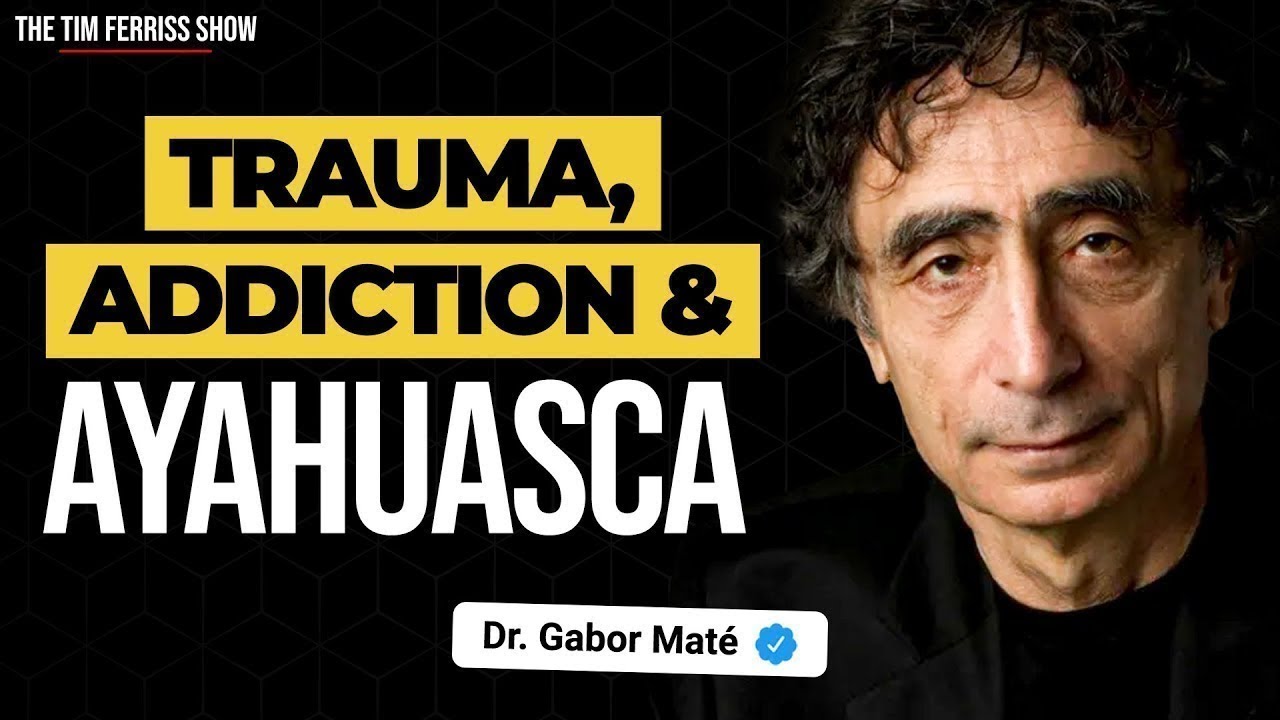
Dr. Gabor Maté, 3.3 tactics per hour
8 tactics in ~2.4 hours. the most-viewed episode in this set on YouTube, per the Podex page.
Maté is a physician who worked with addiction in Vancouver's Downtown Eastside for years. his core reframe: the behavior you hate in yourself started as a solution to something.
the tactic: ask why the pain, not why the addiction. on the tim.blog transcript Maté restates his own line: "not why the addiction but why the pain." ask people what the habit does for them and they describe relief: it numbs, it soothes, it connects. the question changes from self-condemnation to curiosity.
try this week: the next time you reach for a habit you want to quit (doomscrolling, the extra drink, the late-night snack), ask what relief it is giving you right now. write the answer down. that is the real problem to solve.
also on the page: Run A Compassionate Inquiry Instead Of A Self-Verdict, Set An Intention, Not An Expectation, Rebuild The Connection Through Your Body.
source: "Dr. Gabor Maté: Trauma, Addiction, Ayahuasca, and More (#298)," The Tim Ferriss Show (Feb 2018). Podex, tim.blog, YouTube
Gabor Maté, The Tim Ferriss Show
Ask Why The Pain, Not Why The Addiction
Ask what relief a behavior gives instead of why it happens.
Gabor Maté says
Instead of asking why the addiction, the question becomes why the pain. When people are asked what the addiction does for them, they describe it as something that numbs, soothes the pain, makes them feel connected with others, gives a sense of control, or gives inner peace. Asking why the pain instead of why the addiction leads to an examination of that person's life rather than looking just at their brain chemistry.
Try this
For one disliked behavior, ask yourself what relief it gives you instead of asking why you keep doing it.
Jocko Willink, 3.1 tactics per hour
8 tactics in ~2.6 hours. #2 on Tim's all-time top 10. the classic.
people expect yelling and push-ups. the episode is a calm leadership operating system from Ramadi, built on ownership and detachment. it works the same for a company or your own week.
the tactic: take extreme ownership. when your boss is not giving you what you need, Jocko says, the problem is yours. from the tim.blog transcript (PDF): "it's actually your fault because you haven't educated them, you haven't influenced them, you haven't explained to them in a manner they understand". that is where the book title came from.
try this week: pick one thing you have been blaming on someone else. write down what you have not yet explained to them, or how you have not tried to influence them. then have that conversation before Friday.
also on the page: Detach To See The Whole Picture, Cover And Move, Prioritize And Execute.
source: "The Scariest Navy SEAL Imaginable... And What He Taught Me (#107)," The Tim Ferriss Show (Sept 2015). Podex, tim.blog, YouTube
Jocko Willink, The Tim Ferriss Show
Take Extreme Ownership
Stop blaming others and take responsibility for explaining what you need.
Jocko Willink says
When something is not going right, people tend to complain and place blame on other people. If your boss is not giving you what you need, it is actually your fault because you haven't educated, influenced, or explained to them in a manner they understand. That is extreme ownership, taking responsibility for everything with no one else to blame.
Try this
Pick one thing you have blamed on someone else and identify what you have not yet explained or influenced, then act on it.

Dr. Andrew Huberman, 2.7 tactics per hour
8 tactics in ~3.0 hours. longest on the shelf, so it ranks last on density. still the best single primer on Huberman's daily foundations.
the stacks and training splits get the attention. the through-line is stricter: five foundations, every single day, and everything else is downstream.
the tactic: re-up the five pillars every 24 hours. sleep, nutrients, movement, light, relationships. on the tim.blog transcript he says "there are just a core set of foundational things that we have to re-up every 24 hours." skip one for a day and you get by. skip it for longer and you hit a wall.
try this week: make a five-box daily checklist (sleep, nutrients, movement, light, relationships). tick each box once a day. the only rule: no box stays empty two days in a row.
also on the page: Front-Load Light, Back-Load Darkness, Build A Three-Part Sleep Stack, Keep The Phone Out Of Your Front Pocket.
source: "Dr. Andrew Huberman: The Foundations of Physical and Mental Performance, Core Supplements, Sexual Health and Fertility, Sleep Optimization, Psychedelics, and More (#660)," The Tim Ferriss Show (Mar 2023). Podex, tim.blog, YouTube
Andrew Huberman, The Tim Ferriss Show
Re-Up The Five Pillars Every 24 Hours
Build a five-pillar daily check and feed all five every day.
Andrew Huberman says
I like to think of sleep, nutrients, movement, light, and relationships as a daily re-up rather than a static list. I have to re-up on each and every one of those five things every 24 hours. If I don't, I can get by for a day or two, but pretty soon I hit that wall where I can't function.
Try this
Each day, put something into sleep, nutrients, movement, light, and relationships; don't let one lapse two days straight.

pick by goal, not by fame
build wealth: Naval.
the play: attach your name to a product or platform that leverages your skill widely. [open on Podex](https://www.getpodex.com/episodes/tfs-ravikant-wealth-happiness)
lead a team: Jocko.
the play: stop blaming others and take responsibility for explaining what you need. [open on Podex](https://www.getpodex.com/episodes/tfs-willink-extreme-ownership)
learn faster: Waitzkin.
the play: find a way to trigger your field's rare, high-stakes moment repeatedly in one compressed session. [open on Podex](https://www.getpodex.com/episodes/how-to-cram-2-months-of-learning-into-1-day-josh-waitzkin-the-tim-ferriss-show)
fix a relationship: Brené Brown.
the play: ask your partner to name a number today and plan small kindnesses if the total feels low. [open on Podex](https://www.getpodex.com/episodes/tfs-brown-vulnerability-armor)
what this ranking is not
every episode above has more plays behind the free one. open it on Podex, grab the step, run it this week. tactics, not takeaways.
one summary, every tuesday.
the tactics that matter, each with a step to run. unsubscribe anytime.
FAQ
What are the best Tim Ferriss episodes to start with?
If you want actionable density, start with Josh Waitzkin (#375), Brené Brown (#409), and Jordan Peterson (#502). If you want the episodes Tim's own listeners made most popular, start with Jocko Willink (#107) and Naval Ravikant (#473).
What is the most popular Tim Ferriss episode?
On Tim's own top 10 list (as of September 2017), Jamie Foxx (#124) is #1 and Jocko Willink (#107) is #2. On his 2020 top 30 (ranked by downloads in the first week after release), Brené Brown (#409) ranked #4 and Naval (#473) ranked #7.
How long are Tim Ferriss episodes?
They vary a lot. In this set, the YouTube versions run from about 39 minutes (Josh Waitzkin) to about three hours (Andrew Huberman). Many classic interviews sit around two hours or more.
Does Tim Ferriss publish transcripts?
Yes. tim.blog publishes transcripts for many episodes, and every quote in this post was checked against one of them.
What are the best Tim Ferriss episodes according to Reddit?
Threads on r/timferriss keep coming back to Naval, Derek Sivers, Seth Godin, Debbie Millman, Terry Crews, and Josh Waitzkin. Naval and Waitzkin are on the Podex shelf and ranked above.
How is this different from other "best Tim Ferriss episodes" lists?
Most lists rank by downloads or personal favorites. This one ranks by tactics per hour from the Podex catalog, and every pick includes one try-this-week step plus links to the Podex episode page, the tim.blog page, and YouTube.