best podcasts for starting a business: 6 episodes, one for each stage
“Do it by hand first. If people don't like it better, you do not pass go.”
the short version
paste any long business episode into Podex and get the tactics, each with one concrete step, in a few minutes. that is how this list was built.
the six episodes
pick the idea: Kevin Ryan on The Tim Ferriss Show
12 tactics in ~76 minutes (4558s). 42K views on YouTube, per the Podex page. new in the Podex catalog this week, from the serial founder behind DoubleClick, Gilt, Business Insider, MongoDB and Zola.
Kevin Ryan's test for an idea is almost romantic, on the captions: "I start with a business crush, meaning there's an idea and I can't stop thinking about it." he does not write a business model first. he waits: "if that sticks with me for like two weeks, I generally do it."
the tactic: crush test plus a 10-year trend. the crush tells you whether you will last. the trend tells you whether the market will. to build an important company, he says, "It does take 10 years." so the trend must hold that long: if it is hyped today and done in two years, or started five years ago, you are too late. his own miss: in 2003 serving video cost "about $10 per thousand" views while ads paid about a dollar. they saw the lines would cross by 2005 or 2006. "we should have started YouTube and we didn't."
try this week: write down every idea you keep coming back to, with today's date. do not work on any of them for 14 days. the ones you are still adding to unprompted pass. for each survivor, write the trend under it and one sentence on why it still holds in 10 years.
Kevin Ryan, The Tim Ferriss Show
Bet On The Ten Year Trend, Then Find Who It Crushes
Find the exact point where a ten year trend's cost and revenue curves cross, and build there, not on the trend alone.
Kevin Ryan says
I watch the specific cost and revenue lines falling and rising until they cross, that's the real signal.
Try this
Bet on a ten year trend and build at the exact point its underlying costs and revenue cross.

pick the market: Mark Pincus on My First Million
12 tactics in ~85 minutes (5114s). 43K views on YouTube, per the Podex page. the Zynga founder, walking through what he would build at 25 or 30 with little money and access to AI.
Mark Pincus starts with the market, not the idea, on the captions: pick the right body of water and you do not have to pick the right boat, "but if you pick the wrong body of water the best boat isn't going to help you".
the tactic: proven, better, new. copy what already works in that market, onboarding and all, and assume the incumbent figured out what users want. then be honest about your twist: "better is actually really hard to get to. What we think is better is new." better means nearly every user would pick yours. to find out, shrink it to one slice, like coffee shops in one city, and run it yourself. his rule: "Do it by hand first. If people don't like it better, you do not pass go." automation comes later.
try this week: pick the product your customers already pay for. write down its onboarding and pricing exactly as they are. under it, write the one change you think nearly every user would prefer. then deliver that change by hand, no code, to five people and ask if they like it better.
Mark Pincus, My First Million
The Proven-Better-New Framework
Copy a proven product exactly, test one better idea by hand, then automate with AI.
Mark Pincus says
I talk about doing a legal copy of a proven product, onboarding and all, assuming the incumbent already figured out what users want. Then you ask whether you have something 10 out of 10 users would say is better, and usually you don't, you just have something new. Test the new idea by hand in one city or slice before building any software, and if people don't like it better you don't pass go. Only after that do you consider using AI to automate it.
Try this
Copy a competitor's onboarding and pricing exactly, identify one change nearly all users would prefer, and test it by hand before building anything.

fund it lean: Greg Live on The Iced Coffee Hour
12 tactics in ~2.2 hours (7978s). 136K views on YouTube, per the Podex page. the most watched and longest episode here: the Bloom co-founder on how he would start again from zero.
Greg Live's company now uses 11 manufacturers in the US, he says on the captions. he owns none of the lines. "I've only used 3PL's." checkout ran on Shopify. the start: "I started Bloom with $20,000." why that number? "that was the minimum order quantity at a third party manufacturer." and "the first product wasn't great by any means".
the tactic: rent the infrastructure, then let the minimum order set your budget. you do not need a factory, a warehouse or your own payments. you need the smallest order a supplier will accept, and a store. be clear on what this is: $20,000 is not zero. it is a smaller, real number you can plan for. one more lesson he paid for: "I'm never going to rely on one channel so much for our businesses again".
try this week: list everything you assumed you had to own to start. next to each, write the rented version (contract manufacturer, 3PL, Shopify, a freelancer). then ask three suppliers for their minimum order and price. the lowest real quote is your starting number.
Greg Live, Iced Coffee Hour
Use A Factory's Minimum Order Instead Of Building Your Own Infrastructure
Find a third party manufacturer's minimum order quantity, often as low as $20,000, and treat that as your only starting capital requirement.
Greg Live says
I started my company with $20,000, which was just the minimum order quantity at a third party manufacturer. I never owned a payment processor, I just used Shopify. Anyone can come up with $20,000 in 2026 regardless of their circumstances.
Try this
Find a manufacturer's minimum order quantity and treat that as your real starting capital requirement.
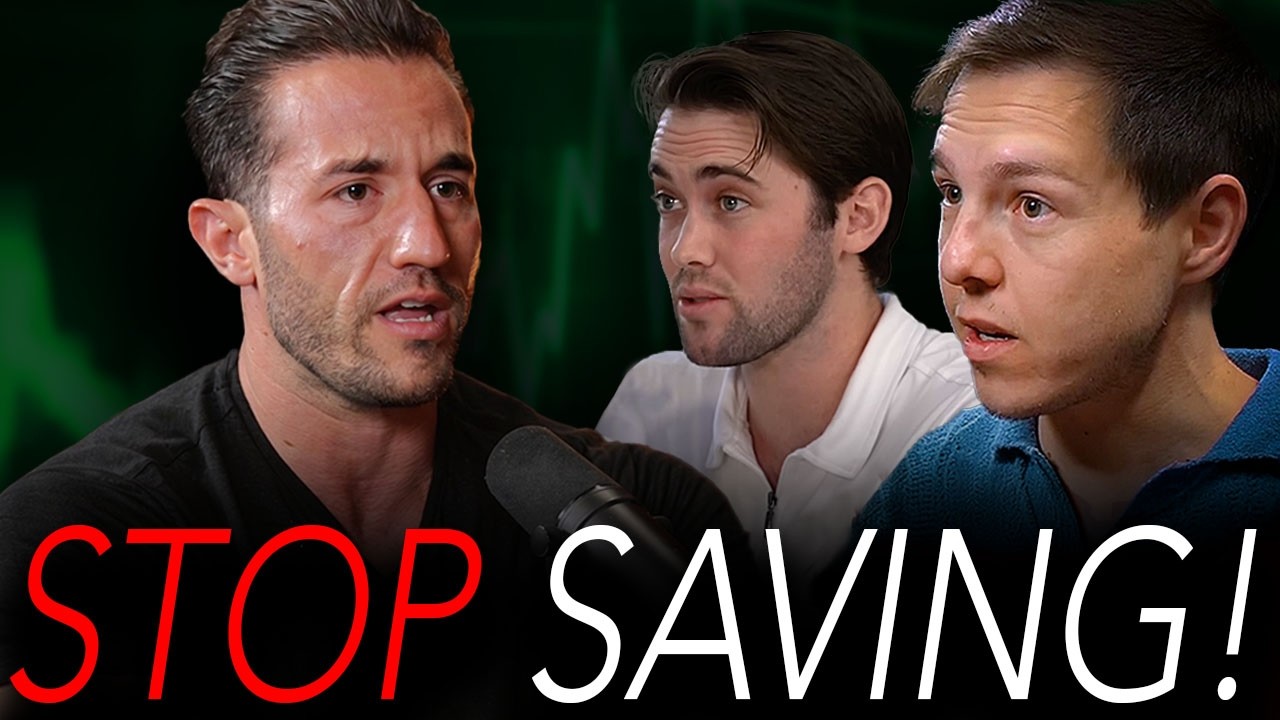
sharpen the pitch: Allison Ellsworth of Poppi on My First Million
10 tactics in ~74 minutes (4460s). 18K views on YouTube, per the Podex page. the co-founder of the soda brand that, per the hosts, sold for $2 billion, starting from a farmers market table.
Poppi started as Mother Beverage, an apple cider vinegar gut health drink, on the captions. after a Shark Tank deal, "we took 9 months off" to rebrand and "we asked ourselves, who is this product for? Who is our consumer?" the answer came from buyers: people drank it on the same occasion as soda. so the gut health tagline on the front of the can became a soda line.
the tactic: be 10 to 15% better, and sell the occasion. forget the 10x rule you hear in San Francisco. her version for food, drinks and beauty: "the best businesses are 10 to 15% better than the established norm." same flavors people grew up with, less sugar, and the extras stay in the small print. the hard part is letting the customer change you: "it's really hard for entrepreneurs to change, by the way."
try this week: write down the product your customer buys today instead of yours. write your 10 to 15% better in one line. then ask five customers when and where they use it, and rewrite your headline around that moment.
Allison Ellsworth, My First Million
Position As Soda Not Health Drink
Match your tagline to how people actually use the product.
Allison Ellsworth says
We started as Mother Beverage, a niche apple cider vinegar gut health drink. After the Shark Tank deal we took nine months off to rebrand. We noticed people were drinking it in the same occasion as soda. We changed the tagline from Be Gut Happy Be Gut Healthy to Soda's Back Better Than Ever. We focused on vibrant packaging and emotional connection like soda.
Try this
Identify the real-world occasion customers use your product for and rewrite your tagline to match that emotional use case.

find the first customers: Jeff Harmon on My First Million
11 tactics in ~63 minutes (3795s). 40K views on YouTube, per the Podex page. the marketer behind Poo-Pourri, Squatty Potty and Purple ads, on the one advantage every new business needs.
Jeff Harmon's first hit was a tongue cleaner, on the captions. the video cost five or six hundred dollars. YouTube had just launched its ad platform and "those ads cost less than a penny per view", so every dollar in ads brought back two or three. his rule: "everybody who starts a business, you have to find your glitch."
the tactic: find your glitch, then hold a beachhead. a glitch is a channel where attention is cheap because nobody else is paying for it yet. that tongue cleaner glitch is long gone, so the skill is spotting the next one: "look for things for areas where you have attention from people that nobody else is paying attention to." you do not need the whole market. "They don't have to take the whole beach, just that one little spot and then you can expand from that beach head." his first filter for the product itself: "go after things that solve a problem for yourself."
try this week: list every place your customer spends attention. mark the ones where your competitors are not posting or buying ads. put a small test (five posts, or a tiny ad budget) into the cheapest one and count what it brings back.
Jeff Harmon, My First Million
Find Your Glitch And Treat It As A Beach Head
Find the newest, cheapest attention channel and establish a small beach head before the glitch closes.
Jeff Harmon says
I look for a glitch in the system, a place where attention or cost is temporarily out of line with its real value. I don't need the whole market, just one foothold, a beach head I can hold and expand from.
Try this
Find a temporary glitch in attention or cost and establish a small foothold there first.

fix the first stall: Dan Martell
7 tactics in ~26 minutes (1578s). 43K views on YouTube, per the Podex page. the shortest episode here, and the newest (October 2026): the diagnostic he ran when one of his companies hit a wall and started declining.
Dan Martell made the classic founder mistake early on, on the captions: as a developer he kept writing software when the problem was getting people to buy. "Writing more code didn't make me more money, but as a software developer, it felt safe." teams do the same. they speed up the steps they like while one step chokes the rest, because "throughput is the narrowest point of any workflow."
the tactic: the 10x question. map your steps from first contact to paid customer (in his example: lead, book a call, show up, close). then ask: "if I 10x the volume, leads in this example, what breaks?" a tell: work piles up right before the real constraint. fix that step and nothing else, and put a number on it, because "every bottleneck is just a hidden KPI."
try this week: draw your steps on one page. next to each, write how many people got through it last month. ask what breaks at 10x. spend this week only on that step, and pick the one number you will check every day.
Dan Martell, Dan Martell
Find The Real Constraint Before You Touch Anything
Stress-test your workflow by asking what breaks at 10x volume, then fix only the stage that fails, not the ones that are fine.
Dan Martell says
Throughput is the narrowest point of any workflow, so that's the only step worth fixing. I stress-test the process by asking what breaks if we 10x the volume coming in. Wherever work is piling up, the step right after it is usually the real constraint.
Try this
Ask what breaks at 10x volume, then fix only the stage that fails.

a one-week plan to start a business
pick by problem
you have ten ideas and cannot pick one: Kevin Ryan on The Tim Ferriss Show.
the play: put every idea on a two-week crush timer and keep the ones riding a 10-year trend. [open on Podex](https://www.getpodex.com/episodes/how-to-spot-10-year-trends-and-build-billion-dollar-companies-kevin-ryan)
you want to build something totally new: Mark Pincus on My First Million.
the play: copy what is proven, add one better thing and test it by hand before you build. [open on Podex](https://www.getpodex.com/episodes/how-to-legally-clone-any-billion-dollar-business)
you think you need a lot of money to start: Greg Live on The Iced Coffee Hour.
the play: rent the infrastructure and let a supplier's minimum order set your starting budget. [open on Podex](https://www.getpodex.com/episodes/asking-a-30-year-old-billionaire-ceo-how-he-d-make-1-000-000-starting-from-0)
people say your product is nice but do not buy: Allison Ellsworth on My First Million.
the play: be 10 to 15% better than the norm and sell the moment people use it in. [open on Podex](https://www.getpodex.com/episodes/2b-founder-reveals-the-niches-that-can-make-you-ft-allison-ellsworth-poppi)
you have a product and no customers: Jeff Harmon on My First Million.
the play: find the cheap channel nobody else is paying attention to and hold one small beachhead. [open on Podex](https://www.getpodex.com/episodes/every-successful-startup-starts-with-this-one-advantage)
you have sales but growth stalled: Dan Martell.
the play: ask what breaks at 10x volume and fix only that step. [open on Podex](https://www.getpodex.com/episodes/copy-this-strategy-to-10x-your-business-fast)
what this is not
every page above has more plays behind the free one: start impossibly narrow, hunt dead markets with proven money, never let one channel own you, give the product away and charge for shipping. tactics, not takeaways.
one summary, every tuesday.
the tactics that matter, each with a step to run. unsubscribe anytime.
FAQ
What is the best podcast for starting a business?
For ideas, My First Million keeps coming up in podcast lists and Reddit threads, and three of the six episodes here come from it. But a show is hundreds of hours. If you only listen to one episode first, start with Kevin Ryan on The Tim Ferriss Show for picking the idea, then Mark Pincus on My First Million for testing it.
How do I know if my business idea is good?
Run three cheap tests. Kevin Ryan's: are you still thinking about it two weeks later, and does the trend behind it hold for 10 years? Mark Pincus's: is it clearly better than what people already use, or just new? Then deliver it by hand to a few people before you build anything.
Can I start a business with no money?
The founders here did not start at zero, but close to it. Greg Live started Bloom with $20,000, the minimum order at a contract manufacturer, and rented everything else. Jeff Harmon's first hit was a video that cost five or six hundred dollars. Mark Pincus says to test a new idea by hand before you spend on software.
Does my product need to be 10x better?
Not always. Poppi co-founder Allison Ellsworth says that in food, drinks and beauty the best businesses are 10 to 15% better than the established norm. Mark Pincus adds a warning: most founders think they have better when they only have new, so test it with real users.
How do I get my first customers?
Jeff Harmon's answer is to find your glitch: a channel where attention is cheap because nobody else is paying for it yet. His first one was YouTube ads at under a penny per view. Start with one small beachhead, prove it works, then expand from there.
What should I do when my new business stops growing?
Dan Martell's diagnostic: map your steps from first contact to paid customer and ask what breaks if volume goes up 10x. Work tends to pile up right before the real constraint. Fix only that step and put one number on it.
Is My First Million good for starting a business?
Yes, especially for ideas and early marketing. In this list it supplies the market test (Mark Pincus), the positioning lesson (Allison Ellsworth of Poppi) and the first-customers play (Jeff Harmon). Pair it with an operator episode like Dan Martell's for what comes after the first sales.