how to build habits that stick: 6 tactics, from the first rep to breaking bad ones
“built into this is a kind of permission to fail, but it's not failure”
the short version
paste any long episode into Podex and get the tactics, each with one concrete step, in a few minutes. that is how this list was built.
the six tactics
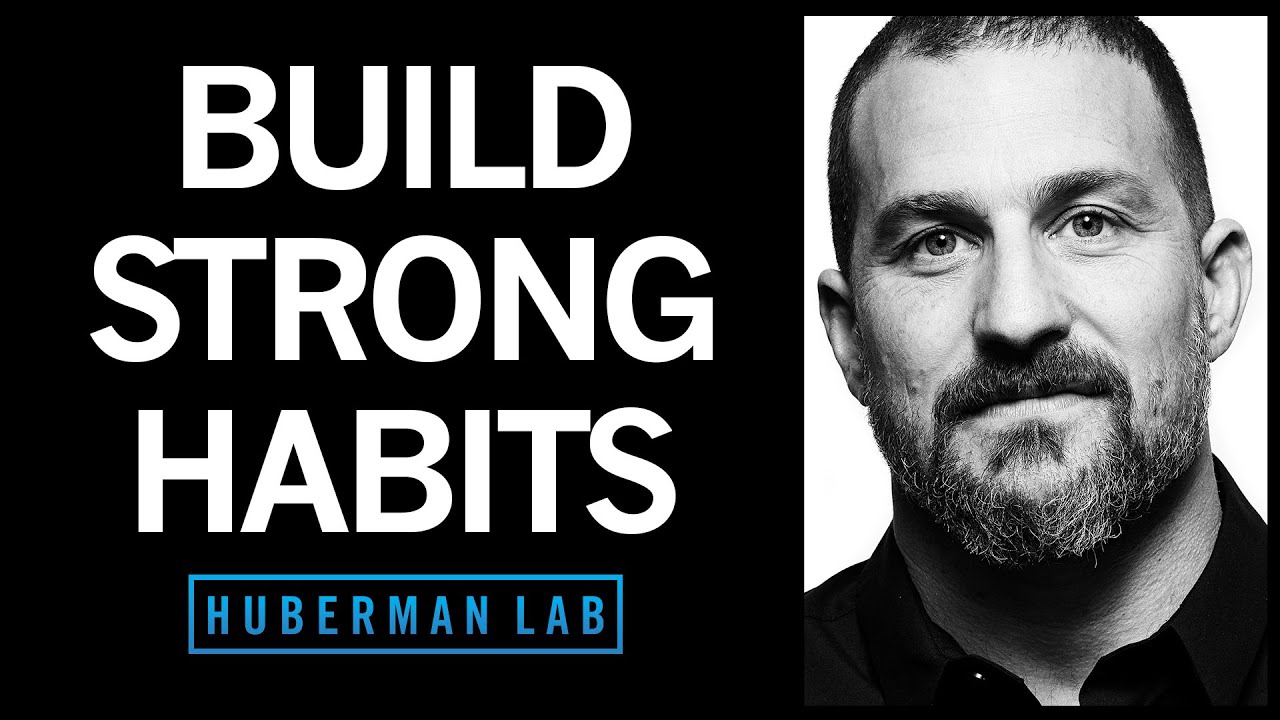
rehearse the steps once before you start: Andrew Huberman on Huberman Lab
7 tactics in ~111 minutes (6638s). 5.6M views on YouTube, per the Podex page. Huberman is a neuroscientist at Stanford. this play is tactic 03, Use Procedural Visualization To Reduce The Threshold For Action.
Huberman's first tool comes from procedural memory, the kind that holds a sequence of steps, like a recipe. on the transcript he says it does not need a quiet room or closed eyes. you "just think about the very specific sequence of steps that's required to execute that habit." his example is an espresso habit: "Walk into the kitchen, turn on the espresso machine, draw the espresso."
the tactic: walk through the habit in your head, start to finish. why it works, in his words: "Your nervous system isn't stupid." it "knows the difference between a thought and an action", but the rehearsal fires the same neurons the habit will need, so when you show up, "it's as if the dominoes fall more easily." you do not need to repeat it daily: "Do it once, maybe twice." he says it also helps when you are trying to get back into a habit you dropped.
try this week: pick one habit you want. tonight, write or say out loud every step, from where you are standing to the last second of it. do it once more before you start tomorrow.
Andrew Huberman, Huberman Lab
Measure Your Limbic Friction Before You Plan Anything
Check whether you feel too anxious or too tired before attempting a hard habit.
Andrew Huberman says
Limbic friction is the activation energy needed to overcome either an overly anxious or overly tired state in order to engage in a particular activity or thought pattern. This term is a useful metric for checking in with yourself about whether you are likely to be able to form a certain habit easily. Viewing sunlight or bright artificial light within the first 30 minutes of waking, along with physical exercise in the 0 to 8 hour window of the day, support an alert, action oriented state.
Try this
Before attempting a hard habit today, check whether you feel too anxious or too tired, and note which state you are in.
borrow from your own past wins: Spencer Greenberg on Modern Wisdom
12 tactics in ~87 minutes (5249s). 122K views on YouTube, per the Podex page. Greenberg runs Clearer Thinking and tested habit techniques on hundreds of people. this play is tactic 03, Use Habit Reflection Instead Of A New Technique, plus tactic 05, the tiny version.
Greenberg did not guess what works. on the transcript: "We ran a giant study on habit formation." his team gave people a random mix of 20 techniques and tracked them for a month. many did little. one stood out: "the most effective technique we found, the most promising one in our study, was one that we call habit reflection."
the tactic: ask what helped last time. "you first think about a habit you succeeded at in the past." then write: "what did you do to help you succeed?" and finally: "how can you apply what you learned from doing that past habit to this new habit?" he likes it because "It's self-adapting." it uses what already works for you. for busy days, add a tiny version: "You didn't get to the gym. You do 10 squats on a day that you don't go to the gym." in his study people did not hide in the tiny version. they "were more successful with the big habit".
try this week: write down one habit you kept for months, and three things that helped. copy at least one onto your new habit. then pick its tiny version for bad days.

plan six, expect four, never catch up: Andrew Huberman on Huberman Lab
same episode as entry 1. this play is tactic 06, Run The 21-Day Program With Built-In Permission To Miss. he says the system comes from someone he knows well who has used it for a long time.
most plans break on the first missed day. Huberman's system plans for it, on the transcript: "you write down six things that you would like to do every day for 21 days." but "the expectation is that you'll only complete four to five of those each day." the point is not the six habits. it is "the habit of performing habits."
the tactic: build the miss into the plan, and never compensate. if you miss a day, there is no punishment, and you do not do extra the next day: "you don't do eight the next day in order to compensate." he also suggests thinking in two-day chunks. then comes the test. for the next 21 days you add nothing new: "You simply try and maintain the ones that you've built in that first 21 days." only what still runs on its own counts as a habit.
try this week: write six habits on one card. tick off four or five a day, no more. on day 22, stop adding and watch which ones keep going without the card.
keep the small promises, and get back on the wagon: Ryan Holiday on The Diary of a CEO
12 tactics in ~86 minutes (5158s). 1.6M views on YouTube, per the Podex page. Holiday writes books on Stoicism, among them Discipline Is Destiny. this play is tactic 04, Keep Small Commitments To Build Self Trust, plus tactic 07, on falling off the wagon.
Holiday borrows a scene from Cormac McCarthy's The Road. a boy tells his father, on the transcript: "if you break the little promises you'll break the big ones". his read: snooze the alarm or skip the writing, and either way you train something. "you're either building the muscle that says I do what I say I keep the commitments that I make or you're building the muscle that says I make excuses". and "you're keeping promises to yourself that nobody even knows that you made".
the tactic: keep the small ones, and when you slip, do not make it who you are. "when we mess up that we don't identify with that". he uses the sobriety picture of falling off the wagon: the wagon keeps going and "you can get back on it anytime". all or nothing, he says, is an excuse in disguise: "it's actually very convenient to be all or nothing". after a bad week, "I have to sit down now" and do a little.
try this week: make one tiny promise to yourself each morning and keep it. if you miss a habit, do a small version of it the same day.

rewrite the story behind a bad habit: Andrew Huberman on The Diary of a CEO
5 tactics in ~4 hours (14517s). 4.8M views on YouTube, per the Podex page. the longest episode here. this play is tactic 04, Break A Habit By Dismantling Its Story.
host Steven Bartlett asks about a habit he has filed under who he is: he grew up in a messy home and is still messy. Huberman, on the transcript: "I think stories are very powerful and very dangerous." a story has a beginning, a middle and an end, so it feels fixed. his view: "neuroplasticity really involves taking an existing story and dismantling some component of it."
the tactic: write the opposite story and let it interrupt the old one. he points to Byron Katie style questions: is it always true? then, for the messy example: "write out one page about what a tidy person you really are." he admits "You'll know that's a lie, right?" the point is to break the fluency of the old story, so the habit gets interrupted. why not a sticky note? "We know sticky notes work for about one day." and "The nervous system only changes if something is new and different."
try this week: pick a bad habit you call part of who you are. write one page as the person who does not have it. read it back the next time the habit shows up.

after a slip, do one good habit right away: Andrew Huberman on Huberman Lab
same episode as entries 1 and 3. this play is tactic 07, Break Bad Habits By Tacking A Good Behavior Onto The Moment After. he draws on a 2020 scoping review by Heather Fritz and on how neurons unlearn links.
Huberman starts with what does not work well. in that review, reminders helped at first, but on the transcript he says "notifications to either engage in habits or to not engage in habits actually were not very effective over time." catching a habit before it starts is hard, because many habits run too fast to stop.
the tactic: use the moment after. "the period immediately after the bad habit execution is a unique opportunity" to do a different, positive behavior. his example is picking up your phone during focused work. put it down, then do something else that is good for you: "maybe you go have a glass of water." or breathwork, or five minutes of a language. it creates "a kind of a double habit that starts with a bad habit and then ends with a good habit", and over time that makes the bad habit easier to spot. keep it easy: "You don't want it to be something that's very hard to execute."
try this week: pick one bad habit and one easy good one, like ten squats or a glass of water. every time you catch the bad one, do the good one right after. no guilt, just the swap.
a one-week plan to build a habit
pick by problem
you plan the habit but never start: Andrew Huberman.
the play: walk through every step of the habit once in your head before day one. [open on Podex](https://www.getpodex.com/episodes/the-science-of-making-breaking-habits)
you have tried every habit trick and none stick: Spencer Greenberg.
the play: write down what helped a habit you kept before, and use it again. [open on Podex](https://www.getpodex.com/episodes/i-read-500-self-help-books-so-you-don-t-have-to-spencer-greenberg)
one missed day makes you quit: Andrew Huberman.
the play: plan six habits, expect four or five a day, and never catch up on missed ones. [open on Podex](https://www.getpodex.com/episodes/the-science-of-making-breaking-habits)
you break promises to yourself: Ryan Holiday.
the play: keep one small promise a day, and when you slip, get back on the same day. [open on Podex](https://www.getpodex.com/episodes/the-discipline-expert-2-000-years-of-research-proves-successful-people-do-one-th)
you think a bad habit is just who you are: Andrew Huberman.
the play: write one page of the opposite story to break the fluency of the old one. [open on Podex](https://www.getpodex.com/episodes/andrew-huberman-you-must-control-your-dopamine-the-shocking-truth-behind-cold-sh)
you keep doing the habit you want to quit: Andrew Huberman.
the play: right after each slip, do one easy good habit, like a glass of water. [open on Podex](https://www.getpodex.com/episodes/the-science-of-making-breaking-habits)
what this is not
every page above has more plays behind the free one: Huberman's phase one and phase two habits, Greenberg's productivity equation, Holiday's delete the apps and lose the password. tactics, not takeaways.
one summary, every tuesday.
the tactics that matter, each with a step to run. unsubscribe anytime.
FAQ
How do I build habits that stick?
Plan for the days you will miss. Rehearse the steps of the habit once before you start, copy what helped the last habit you kept, give the habit a tiny version for busy days, and expect to hit four or five out of six planned habits a day instead of all of them. When you slip, get back on the same day instead of starting over.
How long does it take to build a habit?
It varies a lot. Andrew Huberman cites a 2010 study by Phillippa Lally in which the same habit took some people 18 days and others 254 days to form. His own system works in 21-day blocks: 21 days of building six habits, then 21 days of adding nothing new to test which ones stuck.
What is Huberman's 21-day habit plan?
Write down six new habits you want to do every day for 21 days, but expect to complete only four to five of them each day. If you miss, there is no punishment and you do not do extra the next day. After 21 days, stop adding habits and spend the next 21 days testing which ones you keep doing without effort.
How do I break a bad habit?
Andrew Huberman suggests using the moment right after the bad habit: when you catch yourself, do an easy positive habit straight away, like drinking a glass of water. On The Diary of a CEO he adds a second tool for habits you think are part of who you are: write out the opposite story about yourself to interrupt the old one.
What is the most effective habit technique?
In Spencer Greenberg's study of 20 habit techniques, described on Modern Wisdom, the standout was habit reflection: think of a habit you kept in the past, write down what helped you succeed, and apply those things to the new habit. It works because it adapts to you.
What should I do when I miss a day?
Do not turn the miss into an identity. Ryan Holiday compares it to falling off a wagon that keeps going: you can get back on anytime, and all-or-nothing thinking is just a convenient excuse. Huberman adds that you should not try to compensate by doing double the next day.
What are the best podcast episodes about habits?
Andrew Huberman's The Science of Making and Breaking Habits on Huberman Lab, Spencer Greenberg on Modern Wisdom, Ryan Holiday on The Diary of a CEO, and Andrew Huberman on The Diary of a CEO.