how to build a healthy relationship: 6 tactics from couples therapists and scientists
“We have to dispense with this idea that the one exists. Someone becomes the one by what we build with them.”
the short version
paste any long episode into Podex and get the tactics, each with one concrete step, in a few minutes. that is how this list was built.
the six tactics
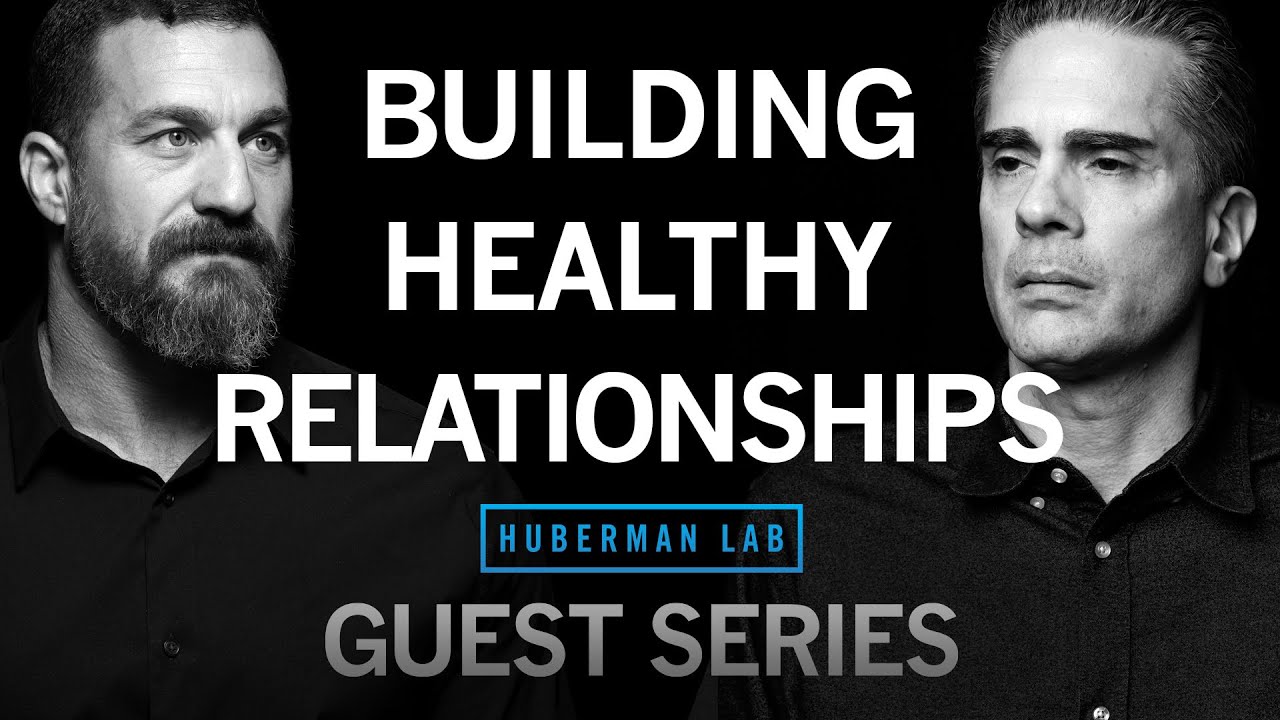
choose for curiosity, not hobbies: Dr. Paul Conti on Huberman Lab
13 tactics in ~185 minutes (11077s). 1.4M views on YouTube, per the Podex page. psychiatrist Paul Conti on relationships of every kind, romantic first. this play is tactic 01, Screen For Generative Drive, Not Shared Interests.
Huberman lists the usual checks: same degree, same music, same love language. Conti's reply, on the transcript: "And I think those things are utterly irrelevant." real deal breakers exist, like one person who wants a family and one who does not. beyond those, he says "what we're looking for is really a compatibility of generative drives", meaning how much each person builds, learns and gives. his test is "how much agency and gratitude is there guiding them".
the tactic: watch how they meet your differences. a shared interest can still go wrong if one person turns it into a contest. the healthy version sounds like this: "Hey, I'm interested in that music because you're interested in it, and I'm interested in you." his summary: "this idea of compatibility revolves around the health in each person".
try this week: bring up something you love that your partner (or date) does not care about. watch for one thing: do they ask a real question about it? then do the same for them. if you are single, swap one item on your checklist for this question.
Dr. Paul Conti, Huberman Lab
Screen For Generative Drive, Not Shared Interests
Replace the shared-interest checklist with a generative-drive screen: do they build, learn, and get curious about what you care about, not whether your hobbies overlap.
Dr. Paul Conti says
I think shared interests, education, and background are utterly irrelevant to real compatibility. Compatibility actually revolves around the health in each person, not logistical overlap. What I'm really checking for is how much agency and gratitude is guiding each person.
Try this
Screen for generative drive and genuine curiosity, not shared hobbies or background.
open up in small doses: Matthew Hussey on The Diary of a CEO
8 tactics in ~95 minutes (5687s). 996K views on YouTube, per the Podex page. dating coach Matthew Hussey on what holds a long relationship together. this play is tactic 01, Practice Calibrated Vulnerability Not Confession Dumps.
Hussey tells the story of a woman he coached on a TV show whose dates stayed on the surface. he told her to be a little vulnerable. on her next first date she told the story of a car accident that changed her whole life. on the transcript, he says: "I didn't mean go and tell the story of the worst thing that's happened to you in your life."
the tactic: risk something small and real. his version: "Vulnerability can be paying someone a compliment because in a way, when you pay someone a compliment, you're handing them a little power". or talking about a nerdy thing you love: "To express that you're passionate about something is vulnerable". the deep stuff comes later. and when your partner does something you do not get, he says to "take a moment to be curious about that thing" before you judge it.
try this week: give your partner (or your next date) one specific, honest compliment, not about looks. then tell them about one thing you love that you rarely talk about. notice what they share back.
Matthew Hussey, The Diary of a CEO
Practice Calibrated Vulnerability Not Confession Dumps
Open with small genuine vulnerability, like a real compliment or an honest enthusiasm, and save deeper insecurities for later instead of confessing everything at once.
Matthew Hussey says
Real vulnerability means taking a risk that someone might not like what they see, not a safe, pre-approved confession. Early on I'd rather hand someone a compliment than a wound, because a compliment still hands them something real about how I feel. I don't reveal every insecurity at once, I let someone in gradually.
Try this
Risk one small honest thing, like a genuine compliment, instead of confessing every insecurity at once.
spend time with other couples: Dr. Paul Eastwick on Huberman Lab
7 tactics in ~171 minutes (10230s). 176K views on YouTube, per the Podex page. UC Davis psychologist Paul Eastwick on what the data say about attraction and staying together. this play is tactic 05, Protect Your Relationship Through Couple Friends, Not Relationship Talk.
it helps to feel that the people around you back your relationship. but Eastwick is wary of the most common way people look for that: asking friends to weigh in on the relationship, a kind of pseudo therapy. "That has some real risks." on the transcript, the version he would advocate "comes from research looking at couple friends or double date nights."
the tactic: let friends see the relationship, not judge it. the idea is "to experience our relationship in real time by hanging out together, the four of us." in his words, that "can often feel like validation without explicitly asking for it". and on average, couples "who feel like they have couple friends and are embedded in networks like that, that generally tends to go well on average."
try this week: plan one double date or group dinner with another couple you both like. the rule for the night: no talking about your relationship problems. just let people see you two together.

ask what makes you hard to live with: Esther Perel on Huberman Lab
12 tactics in ~126 minutes (7573s). 1.3M views on YouTube, per the Podex page. psychotherapist Esther Perel on how relationships change as the people in them change. this play is tactic 07, Ask Yourself What Makes You Hard To Live With.
Huberman asks who is ready for a relationship. Perel's answer, on the transcript: nobody is fully ready, and that is fine. "everyone has relationship issues they're going to have to address at some point in their life. The only question is with whom." she adds that "many relationship problems are not problems that you solve", they are paradoxes you learn to manage.
the tactic: start with your own side of the ledger. the question she asks people, often in the first session: "Knowing yourself as well as you do, what do you think makes it hard to live with you?" it turns the search for the perfect partner into honest self-knowledge. you know your patterns before they show up in a fight.
try this week: write down three answers to her question. be specific: what you do when you are tired, stressed or hurt. if you are in a relationship, ask your partner if you got it right, and listen without defending.

fight about the pattern, not the plot: Esther Perel on Huberman Lab
same episode as entry 4, second play. tactics 03 and 09 on the Podex page, Open Every Hard Conversation With What You Did To Help and Identify Your Conflict Choreography.
when a couple is stuck in a blame fest, Perel does not want the story of the last fight. on the transcript, she starts with a different question: "What have you done this week to make things better?" and "What have you done to make your partner feel that they matter?" she prepares each person to bring "at least one or two things that you can own".
the tactic: name the dance. "I don't need the plot." she says there are only three dances in conflict: "aiming at each other, withdrawing from each other, or one person withdrawing and one person pursuing". once you see which one you do, you can stop fighting about the dishes and start changing the pattern. and if you are both too flooded to talk, she will sit in silence first: "We're going to just wait for our systems to regulate".
try this week: next time a fight starts, pause and say which dance you are in. before your next hard talk, each of you names one thing you did this week to make things better. start there.
repair within 30 minutes: Stan Tatkin on Modern Wisdom
10 tactics in ~69 minutes (4121s). 230K views on YouTube, per the Podex page. couples therapist Stan Tatkin, creator of the PACT method, on why the brain starts treating a partner like a threat. this play is tactic 01, Apologize Within 30 Minutes No Matter Who Is Right.
Tatkin's core idea: hurt that is not repaired fast gets stored as threat memory, until your brain reads your partner as danger. "Quick repair is a way to keep memory from going into long term memory", he says on the transcript. memory is unreliable anyway: "If you're arguing about memory, you're engaged in something where you're both wrong." so "it's so much better to just apologize for however your partner sees it".
the tactic: make fast repair a rule. if you do nothing else: "make sure that you repair to the other person's satisfaction", and "make amends properly immediately or within 30 minutes". if you cannot fix it yet, say "I hate you right now but we're okay." his own rule with his wife: "We can go to bed angry but we have to at least touch toes." and keep it off your phone: "Never do relationship stuff or text."
try this week: agree on a 30-minute repair rule with your partner. after the next rupture, apologize for how they experienced it, with no but. then agree on one thing you both do so it does not repeat.
Stan Tatkin, Modern Wisdom
Apologize Within 30 Minutes No Matter Who Is Right
Apologize unconditionally for what your partner felt, not what you think you did, within 30 minutes of any rupture.
Stan Tatkin says
I repair fast, within about 30 minutes, and I treat that as a non-negotiable rule, not a nice-to-have. I apologize for what my partner experienced, not for my own version of what happened. I don't lose anything by doing this, I keep the relationship intact.
Try this
Apologize fast for what your partner felt, not for your own account of events.
a one-week plan for a healthier relationship
pick by problem
you keep picking people who look perfect on paper: Dr. Paul Conti.
the play: drop the shared-hobby checklist and watch how curious and generous they are. [open on Podex](https://www.getpodex.com/episodes/dr-paul-conti-how-to-build-and-maintain-healthy-relationships-huberman-lab-guest)
your dates stay on the surface, or you overshare early: Matthew Hussey.
the play: risk something small and real, like an honest compliment, and save the deep stuff for later. [open on Podex](https://www.getpodex.com/episodes/matthew-hussey-the-secret-to-building-a-perfect-relationship-e142)
you vent to friends about your partner: Dr. Paul Eastwick.
the play: let friends see you together on a double date instead of asking them to judge. [open on Podex](https://www.getpodex.com/episodes/the-science-of-attraction-mate-selection-relationships)
you are sure the problem is your partner: Esther Perel.
the play: write down what makes you hard to live with, then check it with them. [open on Podex](https://www.getpodex.com/episodes/how-to-find-build-maintain-healthy-romantic-relationships-esther-perel)
you have the same fight over and over: Esther Perel.
the play: name the dance you are in and start with what you did to make things better. [open on Podex](https://www.getpodex.com/episodes/how-to-find-build-maintain-healthy-romantic-relationships-esther-perel)
fights drag on for days: Stan Tatkin.
the play: repair within 30 minutes, for how your partner sees it, and never fight by text. [open on Podex](https://www.getpodex.com/episodes/couples-therapist-why-your-brain-turns-your-partner-into-an-enemy-stan-tatkin)
what this is not
every page above has more plays behind the free one: Perel's three-stage repair after a betrayal, Tatkin's guardrail after every repair, Conti's give without keeping score, Hussey's settle on, not settle for. tactics, not takeaways.
one summary, every tuesday.
the tactics that matter, each with a step to run. unsubscribe anytime.
FAQ
How do you build a healthy relationship?
Treat it as a set of habits, not a feeling. Choose a partner for curiosity and generosity rather than shared hobbies, open up in small doses, spend time with other couples, know what makes you hard to live with, talk about the pattern of your fights instead of the details, and repair quickly after every rupture.
Is love enough to make a relationship last?
Couples therapist Stan Tatkin says no, because feelings come and go. On Modern Wisdom he argues that long relationships run on a shared purpose and clear agreements, like how fast you repair after a fight, that hold even when neither of you feels loving.
How do you repair a relationship after a fight?
Repair fast. Stan Tatkin's rule is to make amends within about 30 minutes and to apologize for how your partner experienced it, not for your own version of events. If you cannot resolve it yet, he suggests saying you are still okay as a couple. Then agree on one thing you will both do to stop it happening again.
What are the signs of a healthy relationship?
Based on these episodes: both people are curious about each other's interests, vulnerability grows step by step, the couple has friends who know them as a pair, each partner can name their own difficult traits, fights are about patterns rather than blame, and ruptures get repaired quickly.
Does compatibility matter in a relationship?
Real deal breakers matter, like one person wanting children and the other not. Beyond that, psychiatrist Paul Conti says shared education, background and hobbies matter much less than people think. What matters most, he says, is how strong each person's drive to build, learn and give is.
What is the best podcast episode about relationships?
For long-term couples, Esther Perel on Huberman Lab (conflict, apologies, love and desire) and Stan Tatkin on Modern Wisdom (repair and threat memory). For choosing a partner, Dr. Paul Conti and Dr. Paul Eastwick on Huberman Lab. For dating and vulnerability, Matthew Hussey on The Diary of a CEO.