Best Investing Podcasts: 7 Episodes, One Money Rule Each
“Where returns are concerned, time is your friend, but where costs are concerned, time is your enemy.”
the short version
paste any long money episode into Podex and get the tactics, each with one concrete step, in a few minutes. that is how this list was built.
the seven episodes
save on autopilot: Kevin O'Leary on The Iced Coffee Hour
6 tactics in ~94 minutes (5622s). 404K views on YouTube, per the Podex page. the Shark Tank investor on how he runs his own money, from index funds to position limits.
Kevin O'Leary says the math is not the hard part, on the captions: "the hardest part of that is the discipline it takes to decide that you're going to put aside 10 or 15% every week." you do not need to pick stocks. "You just buy an index."
the tactic: automate the saving, then cap the risk. diversification, he says, "It's the only free lunch in investing." his rule for stocks and bonds: "No more than 20% in any one sector." and "no more than 5% in any one stock or bond". the free play on his Podex page is his founder number: build $5 million in cash-like T-bills before anything fancy, because "Liquidity with wealth is actually a superpower." you can start with a much smaller floor.
try this week: set up an automatic weekly transfer of 10% of your pay into a broad index fund. then list what you already own and mark anything over 5% of the total in one stock or over 20% in one sector.
Kevin O'Leary, Iced Coffee Hour
Set The Five Million Liquid Floor Before You Do Anything Else
Build five million liquid in safe assets before putting money into stocks or alternatives.
Kevin O'Leary says
An entrepreneur should strive very hard to have 5 million dollars in T-bills, not in anything else. The first million is the hardest, and once you make it you put it in T-bills. Getting to 2 million is just as hard but not as hard, and 2 to 3 is actually quite easy because you've figured something out. Where you get undisciplined is you start buying things you don't need once your mandates get to 5 million liquid. Most people say they're very wealthy, but they couldn't raise a million dollars by 2:00 in the afternoon if they tried. T-bills were making 3.82% that morning. After hitting that level, the money goes into stocks and into alternatives.
Try this
Set a target of 5 million dollars liquid in T-bills before directing new capital into stocks or other assets.

spend the returns, not the income: My First Million on natural moneymakers
5 tactics in ~39 minutes (2358s). 31K views on YouTube, per the Podex page. Sam Parr and Shaan Puri on the habits of people who keep making money, and the shortest episode here.
the best money rule in this episode is borrowed. one host retells advice that founder Syed Balkhi got from his mentor, on the transcript: "you only spend the second derivative." if you make a hundred grand, "that's not the pool you can spend from." you invest it, and what it earns is your fun money. "you don't get to upgrade your lifestyle" beyond that.
the tactic: lifestyle upgrades come only out of investment returns. it sounds tiny at first. but each year's income adds to the pile, and after five to seven years, the host says, the gains alone can carry your lifestyle. the other host's simpler version: "my annual budget is less than 3% of my liquid net worth".
try this week: write down two numbers: what you earn in a month and what your investments earned last year. the next upgrade you want (new car, bigger flat) has to fit inside the second number. if it does not, it waits.

let time work: Mohnish Pabrai on The Diary of a CEO
6 tactics in ~106 minutes (6350s). 5.8M views on YouTube, per the Podex page. the value investor behind the Dhandho framework, in the second most watched episode here.
Mohnish Pabrai calls the rule of 72 a very important rule, on the transcript: "It tells us how long it takes money to double." divide 72 by your yearly return. "If I have a 10% return, it will take 7 years." at 7%, about 10.
the tactic: think in doublings, and only take bets with a small downside. his most important principle: "heads I win, tails I don't lose much." about how he, Bill Gates, Sam Walton and Richard Branson started: "If they won, they would win big, and if they lost, they'd lose nothing." so before a big upside, check the floor: what do you lose if you are wrong?
try this week: write your real yearly return after fees and divide 72 by it. that is how many years each doubling takes. then pick your next money move and write one line: if this goes wrong, I lose ___. if the blank scares you, shrink the bet.

cut the fees: Acquired on Vanguard
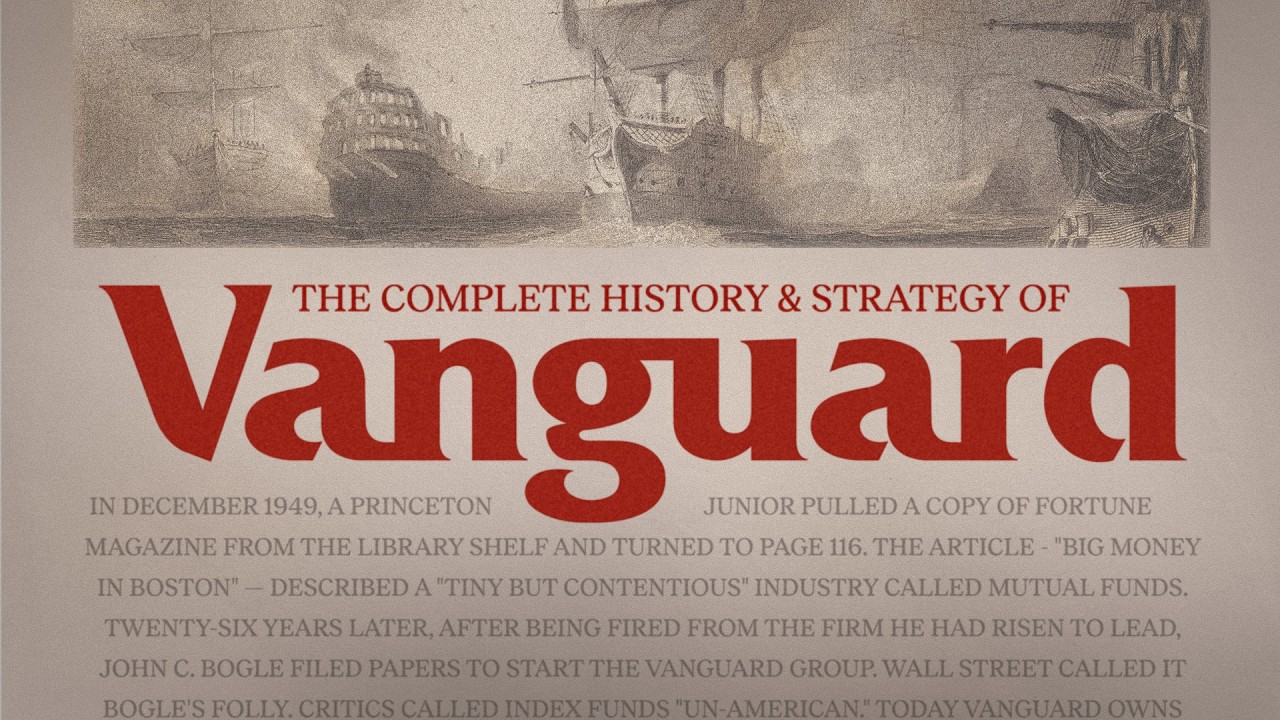
5 tactics in ~3.8 hours (13685s). 107K views on YouTube, per the Podex page. the longest episode here: Ben Gilbert and David Rosenthal on Jack Bogle and the index fund.
Acquired walks through what Bogle later called the "cost matters hypothesis", on the transcript. Ben's math: if the market returns 7% and you pay 1% in fees, "that's actually 1/7th of your gains that you are giving up". his spreadsheet: $100,000 at 25, 40 years at 7%. with a 1% fee along the way, "Instead of $1.5 million, you end up with $1 million."
the tactic: treat every fee like a negative return that compounds. fees look small because they are quoted per year. they are not small over 40 years. Vanguard's answer was structural: its fund investors own it, so lower fees serve the owners. Bogle's line for it was "Strategy follows structure." the free play on the Podex page is about that structure.
try this week: list every fund and account you pay for, with its yearly fee (the expense ratio). mark anything near or above 1%. for each one, look up a low-cost index fund that covers the same market and write down the difference.
Ben Gilbert & David Rosenthal, Acquired
Strategy Follows Structure
Design incentives so leadership always benefits from lowering costs for customers.
Ben Gilbert & David Rosenthal says
Strategy follows structure, that's Jack Bogle's quote on this that he would say often. The investors elect the board of directors, who will always vote to lower fees when they can because it's in their own interest. Every time Vanguard lowers fees, you should view it as reporting higher earnings, and it's a much more tax efficient way to do it than generating profit, recognizing taxes on it, and paying it out as dividends. Vanguard's average ETF and mutual fund expense ratio is now down to 0.07%, compared to an industry average across mutual funds and ETFs of 44 basis points.
Try this
Map every incentive and fee structure in your business and ask who benefits when costs fall, redesigning until the answer is the customer.
decide less: My First Million on the 2.9-decisions investor
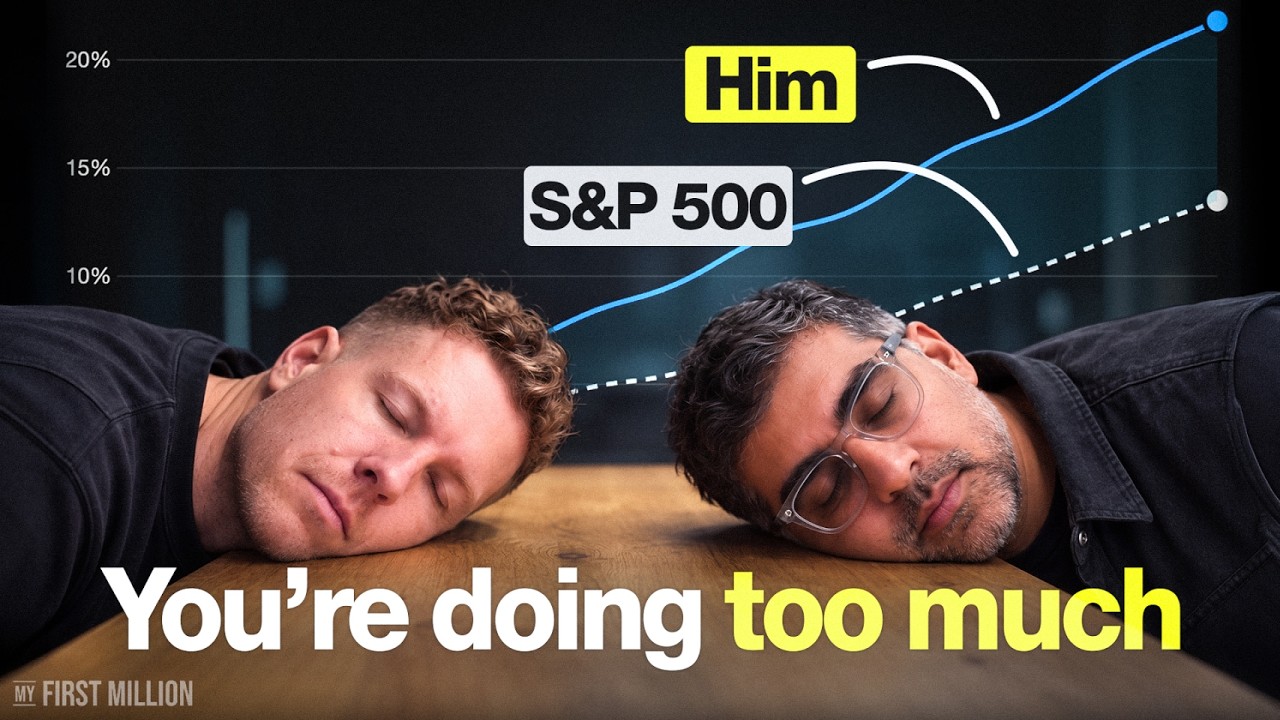
9 tactics in ~49 minutes (2917s). 35K views on YouTube, per the Podex page. Sam Parr put an investor's brokerage history into Claude and counted the decisions.
Sam met an investor who sold his company and now buys public stocks. per the hosts, he beat the S&P 500 in 11 of 12 years. the surprise, on the transcript: "he only made 2.9 decisions a year." Sam's confession: "We move a lot. And we oftentimes mistake movement with progress."
the tactic: do the work up front, then wait for your price. the investor's own process, as Sam reads it out: "I study a few things that I can understand." "I keep very detailed notes." he liked one company for months but found it expensive. when the chance came and "it got cheap enough, I bought it that day." the hosts add a premortem: write down what could go wrong before you commit.
try this week: pick three businesses you understand. start one note per business: what it does, why you like it, what could go wrong, and the price you would pay. then make no trades this week. just watch.
read the cycle: Howard Marks on My First Million
5 tactics in ~47 minutes (2818s). 794K views on YouTube, per the Podex page. the Oaktree co-founder on why he is getting more careful. a different conversation from the Marks episode in our My First Million roundup.
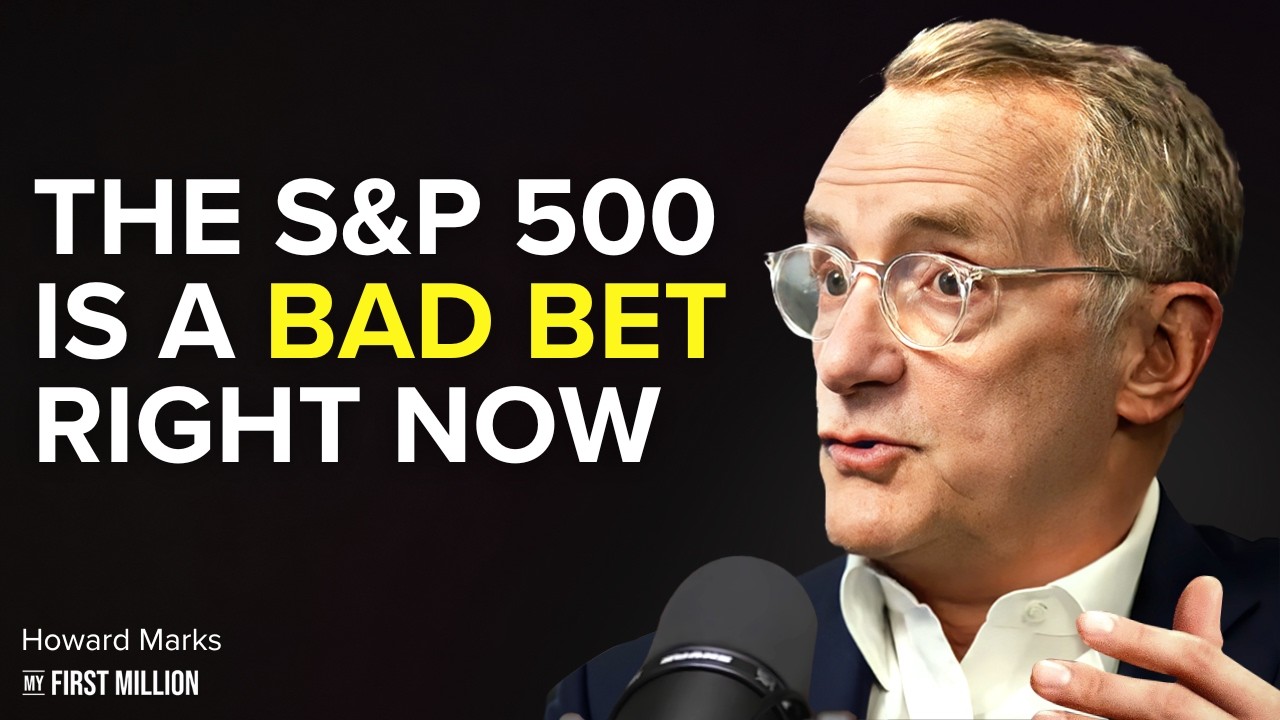
Howard Marks does not forecast. he checks the temperature, on the transcript: "where we stand in the cycle determines what probably is going to happen and how likely it is". his checklist from his first book asks plain questions. is the market rising? are investing TV shows popular? "If an investor goes to a cocktail party, is he mobbed or shunned?"
the tactic: know where you are, and avoid losers instead of chasing winners. at Oaktree, "we go for fewer losers, not more winners." his line on his favorite restaurant doubles as a goal: "Always good, sometimes great, never terrible." he also says each investor should pick a normal risk level on a scale from 0 to 100 and stay near it most of the time.
try this week: answer his checklist questions in one line each: is the market rising or falling, are investing shows popular, do people around you talk about stocks at parties. then write your normal risk number from 0 to 100, and check your mix against it.
Howard Marks, My First Million
You Can't Predict the Market. You Can Know Where You Are.
Check sentiment and deal activity around you to gauge where the market currently stands.
Howard Marks says
We never know where we're going, but we sure as hell ought to know where we are. Are the TV shows about investing popular or unpopular? If an investor goes to a cocktail party, is he mobbed or shunned? When nobody's afraid, unwise deals can get done easily. Where we stand in the cycle determines what probably is going to happen and how likely it is, and understanding that can improve the odds.
Try this
Today, check simple sentiment signals around you, like how eager people are to do deals or talk about investing, to gauge where the market stands.
survive the bubble: Jeremy Grantham on The Diary of a CEO
5 tactics in ~105 minutes (6321s). 8.2M views on YouTube, per the Podex page. the most watched episode here: the GMO co-founder, who believes US stocks are in a historic bubble.
Jeremy Grantham's warning is about incentives, not dates, on the transcript: "you will not receive the advice from investment advisors to get your tail out of the market, ever." telling clients to sell is bad business. so: "Look at the data. A bubble is not hard to see."
the tactic: diversify first, then judge prices yourself. asked what an ordinary saver should do, he starts with: "rule number one is always be diversified." for him that means some bonds, some cash and a little precious metal next to stocks. he compares today's price-to-earnings multiple with the 15 to 17 he calls normal. that is his view, not a timing signal we can promise you.
try this week: look up the current price-to-earnings ratio of your main index and write it next to his 15 to 17. then check that what you own is not 100% one asset type or one country. if it is, write down one change you would make.
Jeremy Grantham, The Diary of a CEO
Understand Why No One Will Warn You
Check market data yourself since firms will not warn you before a crash.
Jeremy Grantham says
Big investment firms went through the crash of '29, the Nifty 50 crash of '72, and the 2000 tech bubble crash, and they never ever warn clients because it's bad business. Big companies cannot advise you, it's suicidal for their business, so you are on your own. Look at the data, a bubble is not hard to see. The more normal average multiple was closer to 15, 16, 17, and he uses 17.
Try this
Look up the current US market price to earnings ratio yourself and compare it to a historical average of around 15 to 17 before trusting investment advice.

a one-week plan to start investing
pick by problem
you keep meaning to invest and never start: Kevin O'Leary on The Iced Coffee Hour.
the play: automate 10 to 15% of every paycheck into a broad index and cap any one stock at 5%. [open on Podex](https://www.getpodex.com/episodes/kevin-o-leary-s-shocking-prediction-for-the-stock-market-housing-prices-2026-eco)
every raise disappears into a nicer life: My First Million on natural moneymakers.
the play: invest the income and pay for upgrades only out of what the investments earn. [open on Podex](https://www.getpodex.com/episodes/6-signs-natural-moneymakers-have-do-you)
you want a big win and ignore the downside: Mohnish Pabrai on The Diary of a CEO.
the play: count your doublings with the rule of 72 and only take bets where losing costs little. [open on Podex](https://www.getpodex.com/episodes/diary-of-a-ceo-ft-mohnish-pabrai)
you have no idea what your funds cost: Acquired on Vanguard.
the play: list every fee, treat it as a negative return that compounds, and move to low-cost index funds. [open on Podex](https://www.getpodex.com/episodes/vanguard-the-communist-capitalist-who-saved-investors-a-trillion-dollars-audio)
you trade every time the news moves: My First Million on the 2.9-decisions investor.
the play: study a few businesses deeply, write your price, then wait. [open on Podex](https://www.getpodex.com/episodes/this-guy-beat-the-s-p500-for-11-years-doing-almost-nothing)
you keep trying to predict the market: Howard Marks on My First Million.
the play: skip the forecast, check how hot the market is with a simple checklist and set your normal risk level. [open on Podex](https://www.getpodex.com/episodes/howard-marks-warning-getting-out-now)
you are scared prices are too high: Jeremy Grantham on The Diary of a CEO.
the play: diversify first, then compare the market's price-to-earnings ratio with history yourself. [open on Podex](https://www.getpodex.com/episodes/billionaire-s-warning-i-m-selling-the-crash-is-already-here)
what this is not
every page above has more plays behind the free one: the 20 and 5 rule, the 10 or 15% weekly transfer, the rule of 72, the cost matters hypothesis, the 140-reason premortem. tactics, not takeaways.
one summary, every tuesday.
the tactics that matter, each with a step to run. unsubscribe anytime.
FAQ
What is the best podcast for learning about investing?
For beginners, a few specific episodes beat a whole show. Start with Kevin O'Leary on The Iced Coffee Hour for the saving habit, then Acquired's Vanguard episode for fees and index funds. Howard Marks on My First Million is the best short episode on market cycles.
Which investing podcast episodes should beginners start with?
In this order: Kevin O'Leary (save 10 to 15% into an index every week), the My First Million episode on natural moneymakers (spend only the returns), and Mohnish Pabrai on The Diary of a CEO (the rule of 72). Then add Acquired on Vanguard for costs.
How do I start building wealth from nothing?
Pay off expensive debt first. Then automate a fixed share of every paycheck into a broad, low-cost index fund. Kevin O'Leary says the hard part is the discipline to put aside 10 or 15% every week. Keep lifestyle upgrades inside what your investments earn.
What is the rule of 72?
Divide 72 by your yearly return to see roughly how many years it takes your money to double. Mohnish Pabrai's examples on The Diary of a CEO: about 10 years at 7%, 7 years at 10% and about 5 years at 15%.
Do investment fees really matter?
Yes, because they compound. On Acquired, Ben Gilbert works through $100,000 invested at 25 for 40 years at 7%: about $1.5 million without fees, about $1 million with a 1% yearly fee. Check the expense ratio of everything you own.
What does spend only the second derivative mean?
It is a rule from My First Million: invest your income and pay for lifestyle upgrades only out of what those investments earn. One host's simpler version is keeping the yearly budget under 3% of liquid net worth.
Should I sell because experts say the market is in a bubble?
That is your call, ideally with a licensed adviser. Jeremy Grantham argues US stocks are in a bubble, and Howard Marks says high price-to-earnings ratios have meant low returns. Both start with the same safer move: be diversified and know your normal risk level.