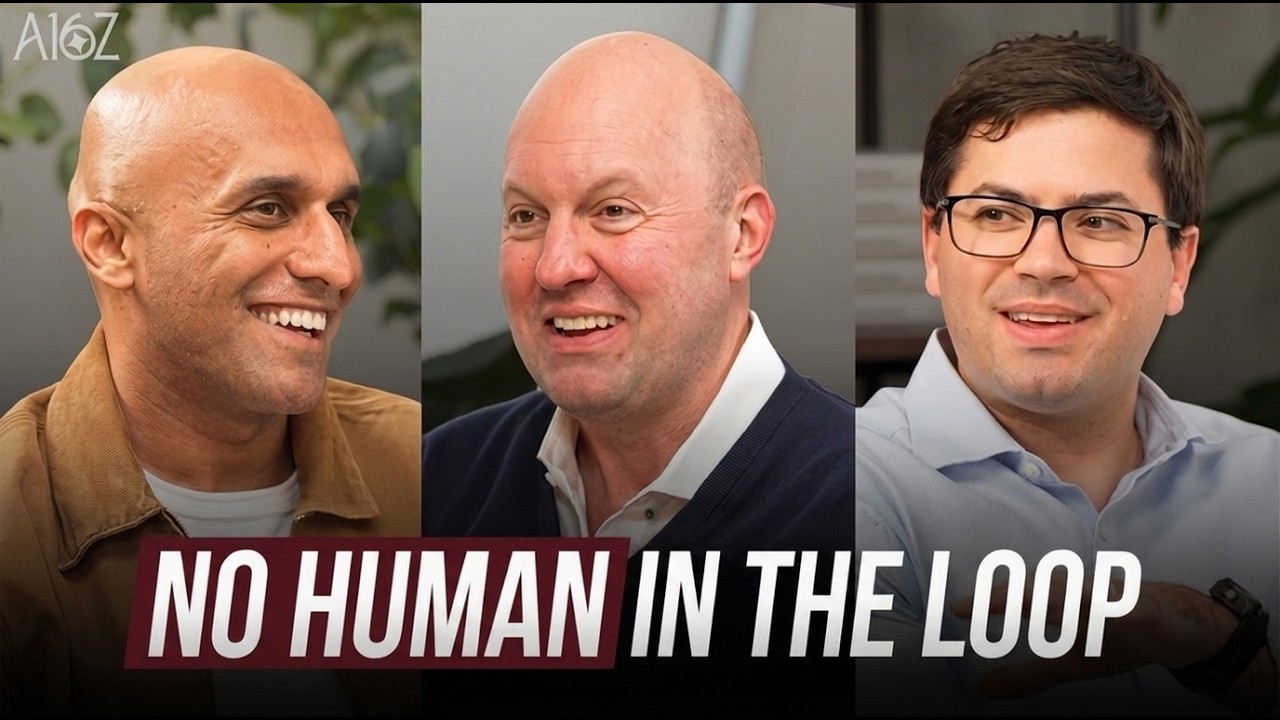
Why Physical AI Is the Next Frontier | Applied Intuition with a16z
Physical AI, sovereign autonomy, and why the machines that move the world will matter more than the machines that move data. The company putting intelligence on a billion physical things explains how it actually works.
With Qasar Younis & Peter Ludwig, Applied Intuition
"In this intelligence revolution, the companies that impact the physical world might actually be bigger than the companies that impact the digital world." — Qasar Younis, Applied Intuition
Qasar Younis & Peter Ludwig, Applied Intuition, on the episode
This is a conversation between two co-founders of Applied Intuition and their early investors on The Z Podcast. Applied Intuition builds the software and AI that makes physical machines autonomous: trucks, tanks, drones, mining equipment, port systems, agricultural vehicles. The pop framing of the company is self-driving cars, but automotive is already below 30% of their business and shrinking as a share. The operating system underneath is closer to a chipmaker than a car company: deep design wins, long relationships, proprietary data, and a platform that deploys across every vertical where machines move. This conversation covers where physical AI actually is today, why the cost curve is about to break, and what their new agentic development platform, Dana, means for who gets to build autonomous systems.
Tactic 01
Qasar Younis & Peter Ludwig, Applied Intuition, a16z
The Cost Cliff: When Sub-$1,000 Driver Assistance Makes Safety Standard Equipment
The play
Plan around driver assistance becoming standard, then routine and cheap, in phases.
Qasar Younis & Peter Ludwig, Applied Intuition says
L2++ driver assistance becomes standard around start of production in 2028 to 2029. By the early 2030s it becomes routine and cheap, maybe 2032 or 2033. OEMs are not resistant because they doubt the tech, they want a price envelope that fits their thin margins.
Try this
Build planning scenarios for driver-dependent businesses: L2++ standard around 2028-2029, routine ubiquity around 2032-2033.