Back to Catalog
Y COMBINATOR · EXTRACTED

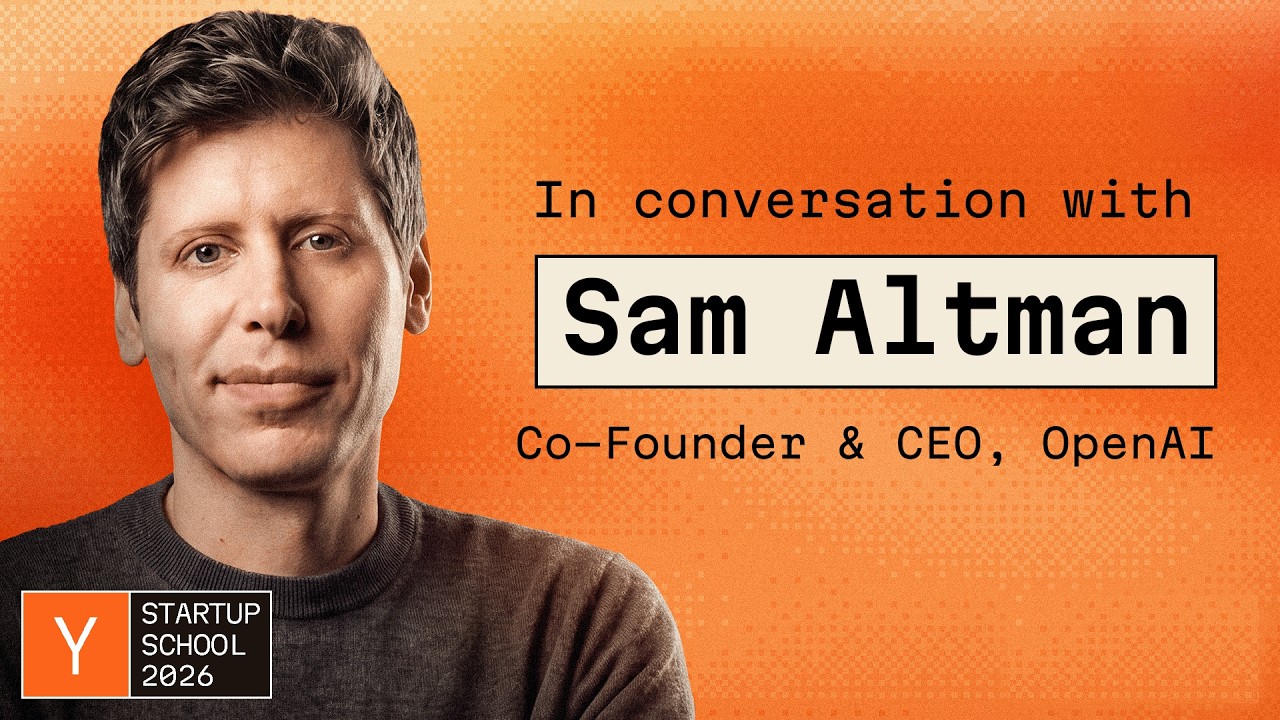
Sam Altman: "Never a Better Time to Do a Startup"

Bet against the consensus, build your network before you need it, and why the next six months will feel like two years of model progress compressed.

125K views on YouTubePreview, 1 of 8 tactics free

With Sam Altman

"I would bet that the startups created today will be much more valuable, much more impactful than startups of the past." — Sam Altman
Sam Altman, on the episode

This is Sam Altman speaking at Startup School, fielding questions from a moderator in front of a room full of early-stage founders. The pop framing of this moment is that AI is eating the startup opportunity, that joining a frontier lab is the only real move, and that independent founders are fighting a losing battle against incumbents with unlimited compute. The actual operating system Altman is running is the opposite: he argues that fast-moving ecosystems and falling costs have always been the conditions that produce the best startups, and that both of those conditions are more extreme right now than at any prior moment. This protocol pulls the operational and strategic plays from across the full conversation, including the second half where Altman gets specific about model timelines, co-founder networks, and what the next six months actually look like for founders building today.

Tactic 01

Find The Exponential The World Has Not Priced In

At the start of OpenAI, Altman and his co-founders believed AGI was possible at a moment when the mainstream view was not just that they were wrong, but that they were going to cause another AI winter by saying so out loud. The disbelief was nearly universal. What they had was a thesis, increasing internal data points, and the patience to sit with being called idiots for years. That combination turned out to be a structural advantage: no serious competition, time to do the research, time to build the company. Altman frames this as a pattern, not a one-off. The best startup outcomes tend to cluster around moments when a new exponential is forming and the world has not updated to it yet. He cites the internet in 1998-99, the iPhone App Store launch, and Facebook's platform as prior examples. In each case, incumbents lost their footing because the ecosystem shifted faster than they could respond. The signal for a great startup idea, by this logic, is not that everyone agrees it is good. It is that experts in the field think it is a bad idea, and you have data points that suggest they are wrong. He puts it plainly: if you are starting the same startup as everybody else, you can raise money and get hype, but those are much less frequently the big outcomes. The exponentials forming right now are unknown to him specifically, but he is confident they exist. The founder's job is to find one and build conviction in it before the world catches up.

The play
Write down the one thing you believe about your space that most smart people in that space would currently call wrong or naive. Then list the concrete data points you have that support your position, not the theory, the actual evidence. If you cannot list at least three data points and the thesis still feels right, that is a signal to keep looking. If you can list them and experts are still dismissing it, that is the shape of a real opportunity. Track new data points weekly. The frustration of being dismissed is the asset: it means you have time and no serious competition.
Tactic 02

Do Three Months Of Work In Three Months

Tactic 03

Expect Six Months To Feel Like Two Years

Tactic 04

Coach Like A Flight Instructor, Not A Lecturer

Tactic 05

Move To The Bay Area To Find Your People

Tactic 06

Hold The Vision Loosely At The Level Of Steps

Tactic 07

Recruit Believers In Your Core Thesis

Tactic 08

Start When The Landscape Is Shifting

Subscribers only
Unlock the full summary
7 more tactics, the full action plan, and every new summary the day it drops.

From $19.99/mo, cancel anytime.

Y COMBINATOR, extracted by Podex