LEX FRIDMAN · EXTRACTED

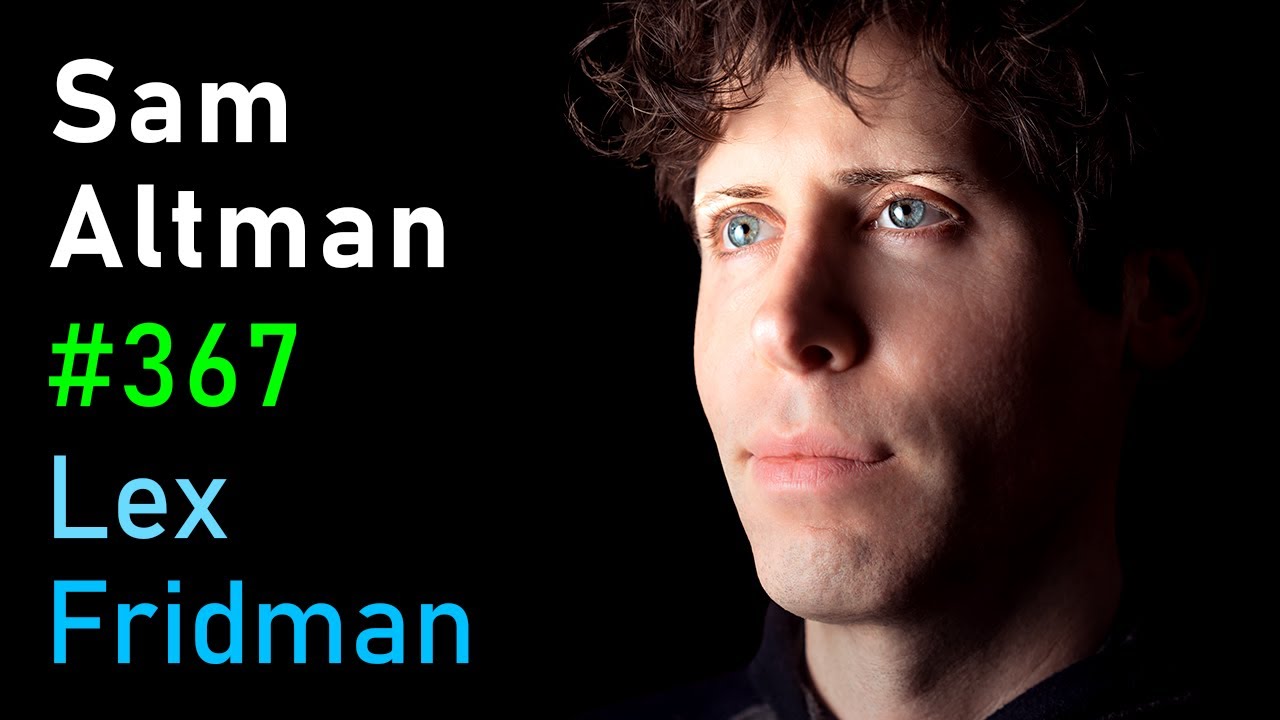
Sam Altman: OpenAI CEO on GPT-4, ChatGPT, and the Future of AI | Lex Fridman Podcast #367

Iterative deployment, alignment as capability, and why the most dangerous AI problems don't require superintelligence to arrive.

Preview · 3 of 5 tactics

"I want to be very clear: I do not think we have yet discovered a way to align a super powerful system." — Sam Altman

This is a conversation between Lex Fridman and Sam Altman, CEO of OpenAI, recorded shortly after the release of GPT-4. The popular framing of OpenAI is a lab racing to ship increasingly powerful models. The actual operating system Altman describes is something more disciplined: a deliberate strategy of deploying early and weak, learning in public, and treating alignment and capability as the same problem rather than opposing forces. The conversation covers how GPT-4 was built, why RLHF works with surprisingly little data, what alignment actually means in practice, and what Altman genuinely fears about the road to AGI. This protocol pulls the operational thinking from the conversation, the parts that explain how the decisions are actually made.

TACTIC 01

Deploy Early And Weak On Purpose

Altman is explicit that OpenAI's strategy of releasing systems before they are perfected is not carelessness. It is the core safety strategy. "We want to make our mistakes while the stakes are low," he says. "We want to get it better and better each rep." The logic is that no internal red team, however large, can match the collective creativity of millions of external users. Every release teaches OpenAI things it could not have discovered otherwise, both capabilities it didn't know the model had and failure modes it didn't anticipate. This is also why Altman says he is genuinely afraid of fast takeoff scenarios, situations where a system improves from roughly human-level to far beyond in a very short window. The iterative deployment model only works if there is time between steps to learn and correct. "I think it's really scary to like have nothing, nothing, nothing and then drop a super powerful AGI all at once on the world." The slow-takeoff, shorter-timelines quadrant is what OpenAI explicitly optimizes toward. The implication is that the transparency is load-bearing. Releasing publicly, writing system cards, publishing safety evaluations, and admitting failures in the open are not PR choices. They are the mechanism by which the feedback loop functions. Without the public surface area, the learning stops.

THE PLAY

If you are building any system that will interact with users at scale, define the smallest version you can release that still generates real signal. Ship it, instrument it, and treat the failure reports as the primary research output. Do not wait for internal testing to approximate what external users will actually do, because it won't.

TACTIC 02

Treat Alignment And Capability As The Same Problem

One of the clearest ideas in the conversation is one that Altman says is widely misunderstood outside the field. Most people think of alignment, making AI do what humans want, and capability, making AI more powerful, as pulling in opposite directions. Altman says the division is much fuzzier than that. "Better alignment techniques lead to better capabilities and vice versa." RLHF is the clearest example. Reinforcement learning from human feedback is described as an alignment tool, a way to get the model to behave according to human preferences. But Altman points out that it is equally a capability tool. The base model trained on a massive dataset has enormous latent ability that is hard to access. RLHF, using surprisingly little human feedback data, makes that capability usable. "It's much easier to get what you want, you get it right more often the first time." The alignment step is also the usability step. This reframe matters for how resources get allocated. If alignment and capability are opposed, every dollar spent on safety is a dollar not spent on performance. If they are the same problem, safety work is performance work. Altman says this is how it actually operates inside OpenAI. "The work we do to make GPT-4 safer and more aligned looks very similar to all the other work we do of solving the research and engineering problems associated with creating useful and powerful models."

THE PLAY

When evaluating any AI development decision, stop asking whether it is a safety choice or a capability choice. Ask instead whether it makes the system more reliably useful to the person in front of it. If yes, it is probably both. Prioritize accordingly.

Newsletter

Get each new playbook the day it drops

One email per drop. No spam. Unsubscribe anytime.

TACTIC 03

Use The System Message To Steer Without Retraining

One of the concrete mechanisms GPT-4 introduced was the system message, a way for developers and users to give the model standing instructions before any conversation begins. You can tell it to respond only in JSON, to behave as a specific persona, to restrict or expand its default behaviors, or to prioritize certain kinds of output. Altman says the model was specifically trained to treat the system message with a high degree of authority. This matters because it separates two problems that were previously tangled together. The first problem is the underlying model's values and capabilities. The second problem is how that model is deployed in a specific context for a specific user. The system message lets operators solve the second problem without touching the first. A children's education platform and a security research firm can both use the same base model and get very different behavior, not by lobbying OpenAI to retrain the model for their use case, but by writing a system message. Altman frames this as the path toward giving users meaningful control over AI behavior without requiring OpenAI to pick one set of values for everyone. "No two people are ever going to agree that one single model is unbiased on every topic and I think the answer there is just going to be to give users more personalized, granular control over time." The system message is the first infrastructure for that.

THE PLAY

If you are building on GPT-4 or any model that supports system-level instructions, write the system message before you write any user-facing prompts. Specify the persona, the constraints, the output format, and the context the model needs to serve your users well. Treat it as configuration, not an afterthought. The model is trained to respect it.

Subscribers Only

Unlock the Full Playbook

2 more tactics + Action Plan

  1. TACTIC 04

    Name The Danger That Doesn't Require Superintelligence

  2. TACTIC 05

    Build Resistance To External Pressure Into The Structure

Subscribe for $19.99/mo

Already subscribed? Log in

LEX FRIDMAN · EXTRACTED BY PODEX