JRE · EXTRACTED

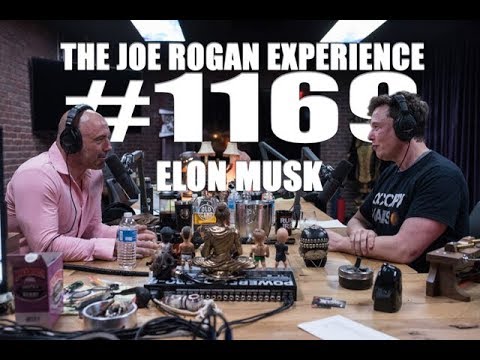
JRE #1169 ft. Elon Musk

First principles, limbic resonance, and why most of what people think is the bottleneck isn't.

69.0M views on YouTube
"I'd rather be optimistic and wrong than pessimistic and right." — Elon Musk

The 2018 JRE with Elon is mostly remembered for two minutes of footage. The joint, the not-a-flamethrower, the simulation talk. The two and a half hours around that are actually a clinic in how Musk reasons. He doesn't talk like a CEO and he doesn't talk like a futurist. He talks like an engineer who has been forced to make decisions about cars, rockets, tunnels, neural implants, and energy systems, and has converged on a small handful of mental models he applies to all of them. This protocol pulls those models out of the noise.

TACTIC 01

When the problem is 2D, the answer is to go 3D

Musk's framing of LA traffic is the cleanest first principles move in the episode. The standard pitch for traffic is "better cars, better lanes, better signals, better routing." Musk's reframe: "the fundamental issue with roads is that you have a 2D transport system and a 3D living and workspace environment." Skyscrapers go up. Roads stay flat. You concentrate vast amounts of human activity vertically and then try to feed it through one horizontal plane. The math doesn't close, so traffic is structural, not behavioral. The fix isn't smarter cars, it's adding a dimension. He chose down because "you can have as many tunnel levels as you want and you can arbitrarily relieve any amount of traffic." His exact line: "ten thousand feet down if you want." The point generalizes. Most "intractable" problems are intractable because the solution space has been quietly constrained to the same dimensionality as the problem. Same surface, same medium, same axis. Add an axis and the constraint stops being a wall.
THE PLAY

Take the problem you've been stuck on the longest. Write down the medium you've been searching for solutions in. Same channel, same workflow, same team, same surface. Then ask what it would look like to add a dimension. Different channel, async instead of sync, vertical org instead of horizontal, software instead of process. The cheap version of this move is usually available before the expensive one.

TACTIC 02

Solve the interface, not the engine

When Joe asks what Neuralink is for, Musk doesn't talk about thinking faster or remembering more. He goes straight to bandwidth. "Your phone is already an extension of you. You're already a cyborg." The computer is fine. The processor is fine. What's broken is the connection between you and it. Output goes through ten fingers. Most people are down to two thumbs. He calls it "a tiny straw of information flow between your biological self and your digital self." Neuralink isn't a better brain. It's a wider straw. The reframe is what matters. Most products try to be smarter, faster, more powerful. Musk's argument is that for any tool a human uses, the bottleneck is almost never the tool anymore. The tool is overpowered. The bottleneck is the I/O. The keyboard, the screen, the meeting, the search box, the form field. That's where the work pools up and slows down.

THE PLAY

Pick the tool or system you use most. Don't ask "how could this be more powerful?" Ask "where is the straw between me and it?" That's where the leverage is. Usually it's a keyboard shortcut you never learned, a form that asks for the wrong thing, or a meeting that should have been a doc. Fix the interface and the tool gets effectively smarter without changing.

TACTIC 03

Reaction time beats intelligence

The most overlooked technical point in the episode is the traction control argument. Musk explains why electric cars handle ice better than gasoline cars, and the answer is not torque or weight. It's reaction speed. "It's operating at the millisecond level. So it can turn traction on and off within inches of getting on the ice." Then the line worth keeping: "In the frame of the electric motor, you're moving incredibly slowly. You're like a snake. You're a snail." A gasoline engine reacts to a slip after the slip has already become a problem. An electric motor reacts inside the slip. He's making a more general point about feedback loops. A faster, dumber system beats a slower, smarter one in almost any volatile environment. The smartest possible system that updates once a day loses to a mediocre system that updates a thousand times a second.

THE PLAY

Audit one critical feedback loop in your business. Support response time, deployment cycle, decision latency, whatever your equivalent of "wheel slip" is. Stop trying to make the response smarter. Make it faster. Cut the loop by an order of magnitude even if the quality of each individual response drops. Frequency beats accuracy at high enough volume.

TACTIC 04

The known endpoint test

Musk's argument against fossil fuels in this episode isn't moral and barely environmental. It's logical. "Obviously we're going to run out of oil in the long term. There's only so much oil we can mine and burn. We must have a sustainable energy transport and energy infrastructure in the long term. So we know that's the endpoint. We know that. So why run this crazy experiment where we take trillions of tons of carbon from underground and put it in the atmosphere and oceans? This is an insane experiment. It's the dumbest experiment in human history." The mental model is clean. If the endpoint is known, the only variable is how much damage you absorb on the way to it. Delay isn't neutral, delay is the cost. People run "dumbest experiments" constantly inside their own businesses. Staying on a stack they know they'll have to migrate. Hiring for a role they know won't exist in two years. Keeping a customer they know will churn. The known endpoint test cuts through all of it.

THE PLAY

List three things where you already know the endpoint and you're just delaying it. The legacy system you'll replace. The relationship you'll end. The strategy that will fail. For each, ask what the cost of running the experiment in the meantime is. If the cost isn't small, the rational move is to skip to the endpoint.

TACTIC 05

Build for limbic resonance, not for the cortex

The most product relevant tactic in the episode is hidden inside the AI conversation. Musk argues social networks are "giant cybernetic collectives" and that their success is governed by one variable: "the success of these online systems is a function of how much limbic resonance they're able to achieve with people. The more limbic resonance, the more engagement." He uses it to explain why Instagram is more engaging than Twitter. Images and video bypass the cortex and hit the limbic system directly. Text has to be processed first. AI, in his framing, is "our id writ large" because the things people actually engage with on these networks are limbic, not rational. The corollary he doesn't quite say out loud: most products are designed for the cortex. Spec sheets, comparison tables, feature lists, pricing pages. All of it requires the user's brain to do work before feeling anything. Products that win tend to produce the feeling first and let the brain catch up later.

THE PLAY

Look at your homepage, your onboarding, your first email, your demo. Time how long it takes a new user to feel something. Anything, not just understand something. If the answer is more than a few seconds, you're shipping for the cortex. Move at least one limbic moment into the first ten seconds of the experience. A result, a visual, a small win, a laugh. Engagement metrics will move before any feature change does.

TACTIC 06

Audit the foundation under the strategy, not the strategy itself

Musk is unusually honest about the original Tesla Roadster. He calls the strategy "super dumb." Not the product, the strategy. "It was based on two false premises. One false premise was that we'd be able to cheaply convert the Lotus Elise and use that as a car platform. And that we would be able to use technology from this little company called AC Propulsion for the electric drivetrain and the battery." Neither held. The Lotus chassis ended up so heavily modified that "less than seven percent of the parts were common with any other device including cars or anything." The AC Propulsion tech didn't survive production. The strategy on top of those two assumptions was sound. The assumptions were rotten, and the strategy inherited the rot. The lesson is operational, not strategic. People debate strategy constantly and almost never re-examine the assumptions the strategy is sitting on. Strategy reviews ask "is this still the right plan?" The harder question is "are the things we believed when we made the plan still true?"

THE PLAY

Write down the three assumptions your current plan is sitting on. Not the plan itself. The things that have to be true for the plan to work. For each one, ask when you last tested it. If it's been more than six months and the world has moved, the strategy is probably already broken and you haven't noticed yet.

TACTIC 07

Optimistic and wrong beats pessimistic and right

The closing thread Musk keeps returning to is a strategic, not emotional, defense of optimism. "I'd rather be optimistic and wrong than pessimistic and right. Because if you're pessimistic, it's going to be miserable." He extends it to people. "People are nicer than you think. Give people more credit. Don't assume that they're mean until you know they're actually mean." Same family of moves: default to the prior that produces action, because the prior that produces paralysis costs the same and yields nothing. He's not arguing the world is rosy. He's arguing that pessimism is functionally useless. Pessimism that turns out to be right doesn't reward you, it just confirms you were correct to do nothing. Optimism that turns out to be wrong at least produced motion in the meantime, and motion produces information. Motion is the only thing that updates the prior.

THE PLAY

For the next decision you're stuck on, name your prior. Is it optimistic or pessimistic? If it's pessimistic, flip it for 48 hours and act as if the optimistic version is true. Notice what you do differently. The decisions you make under the optimistic prior are usually closer to the ones you'll wish you had made.

YOUR ACTION PLAN

All the plays, back to back. Use this as your checklist.

  1. 01

    When the problem is 2D, the answer is to go 3D

    Pick a stuck problem. Identify the medium it's stuck in. Add a dimension.

  2. 02

    Solve the interface, not the engine

    For the tool you use most, find the straw between you and it. Widen that, not the tool.

  3. 03

    Reaction time beats intelligence

    Cut one feedback loop by 10x. Accept slightly dumber responses in exchange.

  4. 04

    The known endpoint test

    Find three things where you already know the endpoint. Stop delaying. Skip to it.

  5. 05

    Build for limbic resonance, not for the cortex

    Move one limbic moment into the first ten seconds of your user's experience.

  6. 06

    Audit the foundation under the strategy, not the strategy itself

    Write down the three assumptions your plan is sitting on. Test each one this week.

  7. 07

    Optimistic and wrong beats pessimistic and right

    Flip your prior on a stuck decision for 48 hours. Act on the optimistic version.

Newsletter

Get each new protocol the day it drops

One email per drop. No spam. Unsubscribe anytime.

JRE · EXTRACTED BY PODEX