LEX FRIDMAN · EXTRACTED
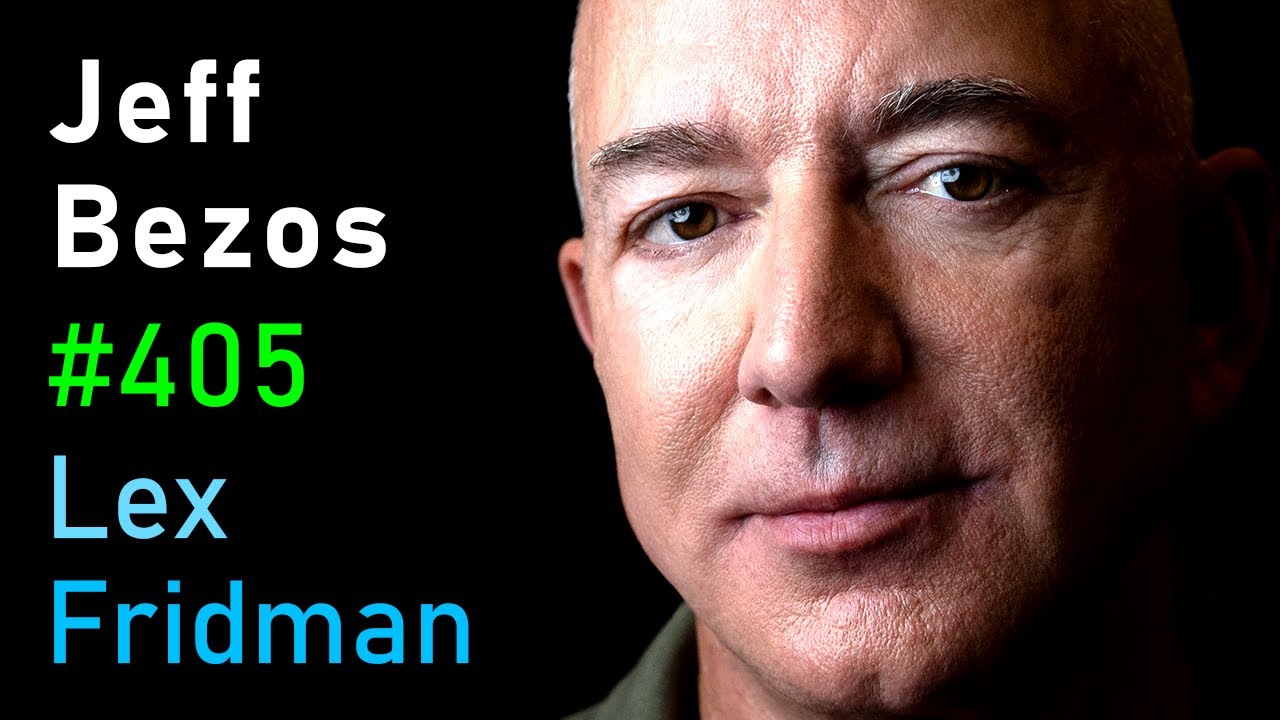
Jeff Bezos: Amazon and Blue Origin | Lex Fridman Podcast #405
Invention as wandering, one-way doors, and why the only interesting problem in rocketry is cost. The operating system behind Amazon and Blue Origin is simpler than it looks: get to truth faster than everyone else.
Preview · 3 of 6 tactics
"When the data and the anecdotes disagree, the anecdotes are usually right." — Jeff Bezos
This is Jeff Bezos's first long-form conversation of this kind, speaking with Lex Fridman across Amazon, Blue Origin, space infrastructure, AI, and decision-making. The pop framing of Bezos is the richest man, the Amazon founder, the rocket guy. The actual operating system underneath is something more specific: a set of interlocking principles for getting to truth faster, making decisions at the right speed, and inventing by wandering rather than by planning. This protocol pulls the sharpest operational ideas from that conversation, the ones with enough specificity to act on.
Separate One-Way Doors From Two-Way Doors
Most decisions that slow companies and teams down are not actually hard. They just get treated as if they are. Bezos draws a hard line between two categories. A two-way door decision is one where, if you get it wrong, you can walk back through and try again. A one-way door decision is consequential, difficult to reverse, and requires a different level of scrutiny. The problem is that most organizations apply the same heavyweight process to both. The result is that irreversible decisions get made too casually and reversible ones get made too slowly. Both are expensive. Bezos says two-way door decisions should mostly be made by single individuals or small teams deep in the organization, without escalation. One-way door decisions are the ones that need to travel up to senior leadership, slow down, and get analyzed from multiple angles. His own example from rocketry: choosing liquid natural gas for the booster stage and hydrogen for the upper stage. Change your mind on that later and you have set the program back by years. The skill is in the sorting. Knowing which category a decision belongs to before you start deliberating is what separates high-velocity organizations from slow ones.
THE PLAY
Before your next significant decision, write down in one sentence which type it is and why. If it is a two-way door, make it today and move on. If it is a one-way door, list at least three additional ways to analyze it before proceeding. Most decisions that feel like one-way doors are actually two-way doors, which means you are probably moving too slowly on them.
Give Invention Permission To Wander
Bezos distinguishes between two types of improvement: incremental and real. Incremental improvement is important and necessary. But genuine invention, lateral thinking that produces something that did not exist before, requires a different operating mode. That mode is wandering, and most people resist it because it looks inefficient. He is explicit about this. When he sits down to work on a real problem, he does not know how long the meeting will take, because if he did, it would mean he already knew the straight line to the solution. The reality is that real solutions often require a long wander first. He says efficiency and invention are at odds with each other, and you have to give yourself permission to take the inefficient path. This applies in solo thinking and in group settings. His preferred format for the latter is a whiteboard session with a small group of smart people, surfacing ideas, raising objections, finding solutions to the objections, and going back and forth. The practical implication is about protecting unstructured time and resisting the cultural pressure to always be moving toward a known destination. A meeting with a fixed end time is a meeting with a ceiling on what it can discover.
THE PLAY
Schedule one meeting this week with no fixed endpoint and a single hard problem on the agenda. Tell the participants explicitly that you do not know how long it will take. When an objection surfaces to any proposed solution, treat it as the next thing to solve rather than a reason to abandon the idea. The kernel of a good idea almost never arrives fully formed.
Newsletter
Get each new playbook the day it drops
One email per drop. No spam. Unsubscribe anytime.
Replace Presentations With Crisp Memos And Messy Meetings
At Amazon and Blue Origin, meetings do not start with a slide deck. They start with a six-page narratively structured memo and thirty minutes of silent reading, together, in the room. Bezos calls this study hall. Everyone reads, takes notes in the margins, and then the discussion begins. The reason for reading in the room rather than in advance is simple: people do not actually read things in advance. They skim, or they bluff, and the meeting spends its first half with half the room catching up. The memo format does something that PowerPoint cannot. PowerPoint is designed to persuade. It is a sales tool. Bullet points let sloppy thinking hide behind the visual structure. A six-page narrative memo written in complete sentences with topic sentences and real paragraphs forces the author to think clearly, because you cannot hide vague reasoning in prose the way you can in three-word bullets. A good memo might take two weeks to write. It is hard for the author and easy for the audience, which is the opposite of a slide deck. The meeting that follows is deliberately messy. Bezos wants the discussion to surface questions nobody knows the answer to, to wander toward a solution rather than march toward a predetermined one. Questions he would have written in the margins of the memo often get answered by the time he finishes reading, which is time the meeting does not have to spend. The format separates the thinking from the discussing, and both are better for it.
THE PLAY
For your next important meeting, replace the slide deck with a one-to-three page narrative memo written in complete sentences. Run the first twenty minutes as silent reading time in the room. Do not let anyone present the document verbally. When the reading ends, open the floor to questions and disagreement. Track how much more specific the discussion is compared to a typical presentation meeting.
Subscribers Only
Unlock the Full Playbook
3 more tactics + Action Plan
TACTIC 04
Disagree And Commit Instead Of Compromising Or Waiting Out
TACTIC 05
Watch The Metric Behind The Metric
TACTIC 06
Build For What Will Not Change
Already subscribed? Log in
LEX FRIDMAN · EXTRACTED BY PODEX