MY FIRST MILLION · EXTRACTED
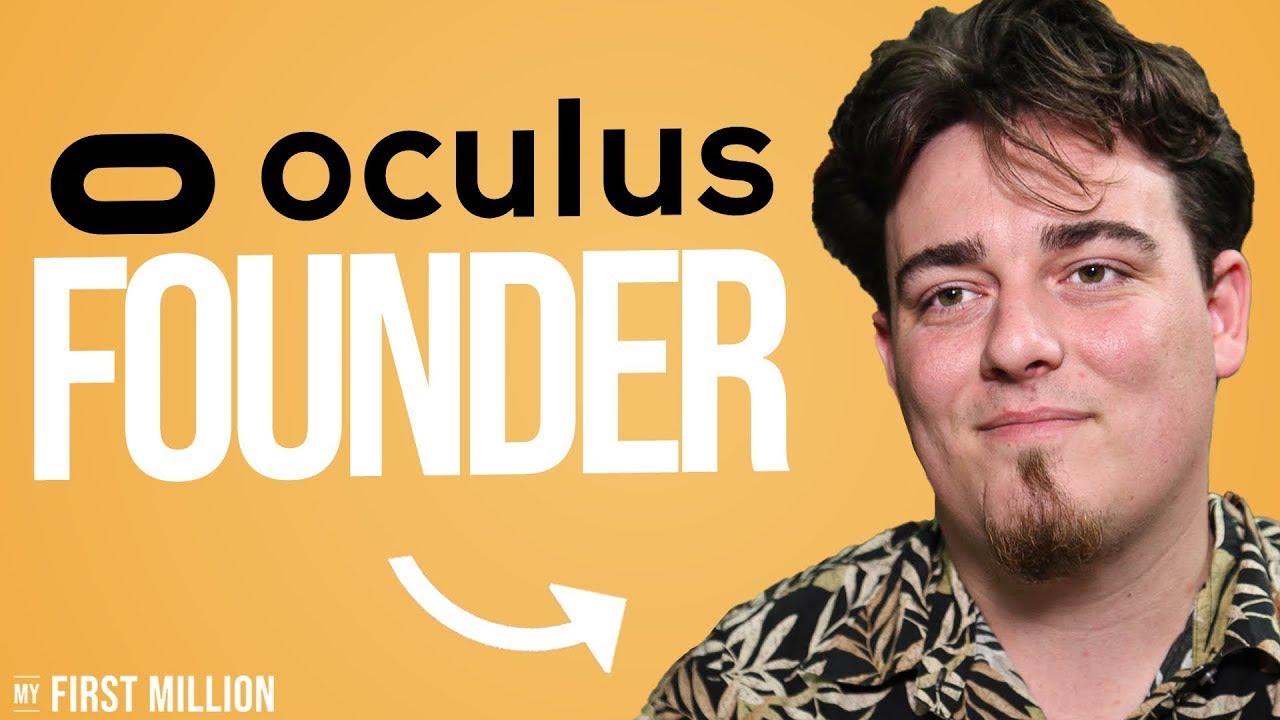
From Flipping iPhones To Selling Oculus For $2 Billion To Facebook | Palmer Luckey (#378)
How to build where no one else will go. Three billion-dollar bets, the incentive structures underneath each one, and why the people who said it was impossible were the best argument for doing it.
Preview · 3 of 5 tactics
"I almost could not have said yes. Like that first offer, narratively it makes no sense. It doesn't align with what I've been trained as, what you do when you're a free-thinking iconoclast." — Palmer Luckey
Palmer Luckey, founder of Oculus and Anduril, sat down with Sam Parr and Shaan Puri on My First Million. The pop framing of Luckey is the boy-genius VR founder who got fired by Facebook and went rogue. The actual operating system underneath is sharper: he is a systems thinker who looks for fields where the incentive structure is broken, identifies what the problem looks like from an adjacent discipline, and then bets his own capital on the fix before any customer exists. This conversation covers how he turned down a billion dollars, why Oculus owes its existence to broken iPhones on eBay, how he structured Anduril to compete against Cost Plus defense primes, and the three business ideas he weighed before choosing national security.
Solve The Incentive Structure Before You Solve The Problem
Every business Luckey seriously considered came down to the same diagnosis: the existing players had the wrong incentives baked in, and no amount of better technology would fix that until the incentive structure itself changed. Private prisons get paid per occupied bed, pre-paid by the government, which means they make more money when more people are incarcerated for longer on less serious charges. Cost Plus defense contractors get paid a fixed percentage of profit on top of whatever they spend, which means they make more money when programs run longer, systems cost more, and parts break more often. In both cases, the incumbent is not failing to solve the problem. They are succeeding at a different problem. Luckey's proposed prison model flipped the payment structure entirely. Instead of collecting up front per bed, the operator would collect only after the person served their term and then stayed out of prison for five full years. That single change converts every incentive from warehousing people to rehabilitating them and releasing them as fast as legally possible. Governments that are always looking to delay expenditures would also benefit, since they only pay after demonstrated results. The insight is not a new rehabilitation method. It is a new billing model. Anduril runs the same logic. Rather than taking Cost Plus contracts and letting the government fund development, Anduril invests its own money first, builds working product, and then competes in open shoot-offs against contractors who were handed government money to develop their systems. Luckey notes that competing contractors literally complained this was unfair, which he takes as confirmation that the model is working. You cannot take no risk and expect all the reward.
THE PLAY
Before building anything, write out the incentive structure of the existing players in your target market. Ask: what does the current provider actually get paid to do, and is that the same as what the customer needs done? If the answer is no, the business model is your product, not the technology. Design your payment terms so that you only get paid when the customer's actual goal is achieved.
Pull From Fields Nobody In Your Industry Is Reading
The core optical breakthrough that made the Oculus Rift viable did not come from optics research. It came from software. High-end VR headsets at the time used expensive, heavy optical stacks specifically engineered to project images with minimal distortion. That is the solution an optical engineer reaches for, because optical engineers work in optics. Luckey was also working in software and noticed that a graphics card could render a distorted image in advance, in the inverse shape of the distortion the cheap lens would introduce, so that after the light passed through the low-cost lens it came out looking correct. A fifty-dollar lens did the job of a several-thousand-dollar optical stack. He describes the same move with the oil-based food idea. Everyone building plant-based meat is trying to build fake food out of food, using beans, chickpeas, corn, and pea protein. Luckey came at it as a materials engineer: if you need a substance with a specific set of physical properties, how it feels in the mouth, how it shears, how it browns, how its texture changes with heat, what material family would you reach for? The answer is hydrocarbons. Humans have spent a century learning to make oil into waxes, gels, rubbers, and pastes with almost any material property imaginable. That knowledge base exists entirely outside the food industry and nobody in food is using it. Luckey is explicit about the pattern. The best gains are rarely at the end of the long specialist fight, where everyone is already competing for two-percent improvements using the best tools of the field. They come from someone who knows enough about two different fields to pick up an idea from one and transplant it into the other, where no one has thought to look for it.
THE PLAY
Pick the hardest unsolved problem in your field. Then spend two hours reading in a completely unrelated discipline that deals with similar physical or structural constraints. Write down three solutions from that field and ask whether any of them would work in yours. Do this once a week for a month and keep a running list of the transplants.
Newsletter
Get each new playbook the day it drops
One email per drop. No spam. Unsubscribe anytime.
Build Your Network By Doing Work In Public For Free
Luckey ran a forum called Mod Retro for people who modified vintage game consoles into self-contained handheld units. No money changed hands. People posted their builds, updated the community on progress, and responded to each other's work over the course of years. The forum's currency was attention, but you could only earn attention by producing something worth paying attention to. That self-selecting pressure meant the people who rose to the top, the moderators and the most active contributors, had demonstrated competence over a long public record that could not be faked. When Luckey needed to hire for Oculus, a significant fraction of his early team came from Mod Retro. His first hire was another forum moderator. He had never worked with this person in a professional setting, had never seen a resume, had never done a standard interview. What he had was years of watching the person's work develop in public. He drove out to pick him up from his mom's house on a Monday and they went to work in a condemned motel. The skills transferred directly. Someone who had spent years cutting apart Nintendo 64s and replacing the power electronics with modern lithium battery systems had the exact hardware instincts Oculus needed. Anduril still runs the same hiring signal. One of the company's listed benefits is that Anduril will buy any employee any tool they want for personal projects, not just work projects. Luckey notes this benefit is invisible to people who clock in and clock out and have no personal projects. It is a golden ticket specifically to people who build things for the sake of building them. Those are the people whose public body of work you can evaluate before you ever shake their hand.
THE PLAY
Start publishing your actual work in a specific technical community, not polished thought leadership, but real in-progress builds, failed experiments, and questions you are trying to answer. Do it consistently for six months. The people who engage seriously with your work over that period are your hiring pool and your future collaborators. When you need to make a hire, look there first.
Subscribers Only
Unlock the Full Playbook
2 more tactics + Action Plan
TACTIC 04
Turn Down The Billion When The Narrative Doesn't Support It
TACTIC 05
Invest Your Own Capital First, Then Compete
Already subscribed? Log in
MY FIRST MILLION · EXTRACTED BY PODEX